Tuesday, 6 January 2026

It's snowing today in Tuscany

Since about 9 o'clock this morning, Tuesday 6 January (Befana - Epiphany), 2026, it has been snowing over much of Tuscany. Large flakes started falling down to about 450m and throughout the rest of the day the snow altitude limit has been dropping further so that by afternoon it was lightly snowing even in Florence.

Snowing in Tuscany
 Snowfall in Montefioralle, Chianti

Obviously it snows every year in the Tuscan mountains and on the peaks of the higher ranges of hills, but snowfall has been decreasing for at least the past 30 years. In Montefioralle (450m), which I visit often in winter, there used to be as much as two feet of snow in the piazza and on the vineyards and olive groves round about, often lasting for a week two at a time during February and a bit less in January. Now it hardly snows at all. However, today there has been quite a heavy snowfall with vineyards and live trees laden with snow.

Cold weather and snow fall are quite important in Tuscany. It is extremely beneficial when the temperature drops below zero centigrade preferably for four or five days. This kills off the overwintering larvae of the olive fruit fly (Bactrocera oleae), Tuscany's most significant olive pest. Cold weather also helps suppress fungal diseases such as Peacock Spot (Spilocaea oleaginea).

Olive fruit frly
The olive fruit fly

Olive trees require a specific number of "chill hours" (typically temperatures between ca. 5 C and ca. 15 C) to break dormancy. In addition, consistent cold weather ensures "uniform bud break," synchronising the flowering period across an olive grove. This synchrony is vital for effective pollination and fruit set.

The exact circumstances of a drop in temperature to below zero centigrade matters a lot. The "Great Freeze" of 1965 which killed off at least 800,000 olive trees in Tuscany, began with a heavy snow fall which by itself doesn't particularly bother olive trees (see the photo below). The temperature then began to rise, cause the snow to become slushy, and then within a matter of hours it plunged to -20 C basically encasing the olive trees in ice. They stayed that way for several days and were killed. This was a devastating economic hit to the Region. All the trees were replanted and after some years became productive again. We had a "mini-freeze" in 2021 which caused the trunks and larger branches of the olive trees, including mine, to burst but hard pruning and trimming saved most of them, and after two years production returned.

Olive trees bowed down under snow

For those of us who have a well or bore hole to provide us with water, a snow fall is much better than a shower of rain to replenish the aquifer. That's be cause in the hill rural areas of Tuscany, the ground is often very hard due to its high calcium content. Rain water thus tends to run off into seasonal torrents (borri) and eventually back into the sea where it came from. Only a small percentage of the rain soaks into the ground. In contrast, because snow stays put for hours or even days, as it slowly melts, most of the melt water soaks into the ground and replenishes the aquifers.

In any case, we're now all enjoying the beautiful views of the Tuscany countryside under snow. And here's a hoopoe that seems total oblivious to the snow.

Hoopoe pecking around in the snow

Snowfall in Radda in Chianti, 6 January 2026

More about Radda in Chianti.

The Pros and Cons of visiting Tuscany during winter.


Tuscany Toscana
Don't forget to visit my Tuscany
Travel Guide!

Up-to-date news on what to see and where to stay in Chianti and all of Tuscany.

Tuscany Travel Guide

vacation accommodations in Tuscany


Author: Anna Maria Baldini

All content copyright © ammonet Italian Web Site Promotion 2026. All rights reserved.

Monday, 5 January 2026

Events and festivals in Tuscany during 2026

The new year has begun and now is the moment to think about events and festivals in Tuscany during 2026. If you're planning a trip to Tuscany, do look at our lists of folkloric festivals, jousts, archery and crossbow contests and numerous other events that take place in Tuscany during the course of the year. These range from the massive float parades of the Carnevale in Viareggio through the great mediaeval costume festivals to simple village food feste.

Events and festivals in Tuscany
Huge processional float at Viareggio Carnevale

The festivals of Tuscany have become more and more polished and exciting in their presentation and yet remain genuine folk festivals dependent entirely on the enthusiasm of the local organisers, in many cases these being competing local contrade, rioni etc. These latter are clubs and societies based on the various residential quarters of villages, towns and cities, the most famous being the contrade of Sienna which enter their horses (and riders) in the famous Siena palio twice every year.

Siena palio
 The Palio in Sienna, Tuscany

In addition to annual or twice yearly events, there are always "unscheduled" occasions to see and even participate in Tuscan folkoric activities. Keep your eyes open for posters advertising upcoming local events in the town you are visiting or where you are staying. They are very often extremely worthwhile attending. One of the most popular of these activities in Tuscany, especially in Florence, are flag tossing groups - bandierai or sbandieratori - who train to become expert in synchronised flag throwing.

Bandierai degli Uffizi di Firenze performing in Piazza Santa Maria Nuova, Florence 
 Bandierai degli Uffizi di Firenze performing in Piazza Santa Maria Novella, Florence 

The competitions are almost always costume events with processions, and very often dinners and food stands play an important role. Look through our lists for local events taking place near where you will be staying, and in addition try to attend at least one major event during your stay.

The main Tuscan festivals.

A comprehensive list of local events and festivals in Tuscany.


Tuscany Toscana
Don't forget to visit Elena Spolaor's
Travel Guide!

Up-to-date news on what to see and where to stay in Chianti and all of Tuscany & Umbria.

Chianti Travel Guide


vacation accommodations in Tuscany

Tuscany tourist information - tourist information

Author: Anna Maria Baldini

All content copyright © ammonet Infotech website promotion 2026. All rights reserved.

Saturday, 3 January 2026

The Fra Angelico exhibition in Florence - last days

It's only a couple of days ago that I was able to visit the marvellous Fra Angelico exhibition currently on show at the San Marco Museum and the Strozzi Palace in Florence. The exhibition is in its final days and will end on 25 January 2026, so if you are in Florence now or have the possibility to be here before then, don't hesitate - this is an amazing display of the works of Fra Angelico of Fiesole (ca. 1395 - 1455) and other artists associated with him and his times. Fra Angelico was born around 1395, named Guido di Pietro, in the Tuscan area of Mugello near Fiesole, not far from Florence. He was one of the greatest painters of the late Gothic and early Renaissance during the 15C, his only competitor, and perhaps superior, in painting during the first part of his life being Masaccio who died at age 26, and Fra Filippo Lippi later. For this exhibition the organisers have gathered over 140 works from Florence and around the world. The exhibition catalogue follows the layout of the exhibition closely and contains illustrations of many of the works on display. Despite its expense (€80), the catalogue is indispensable. (I suspect it will show up on Amazon at a substantial discount after the exhibition closes.) I recommend that you book a time slot first for San Marco since the museum is open only in the morning, and then go on to Palazzo Strozzi after lunch, if you plan to see the entire exhibition in one day.

Fra Angelico exhibition catalogue 
 
In this review, I'll emphasize some aspects of Fra Angelico's artistic output and other items on display that especially interested me and which might be less familiar to my faithful readers.


San Marco Museum


All of Fra Angelico's admirers as well as huge numbers of other art enthusiasts will already be familiar with the frescoes he painted in the monks' cells in the Monastery of San Marco by commission of his first and greatest patron, Cosimo de Medici, the Elder. These frescoes form the major part of the exhibition at San Marco. 
 
Fra Angelico: fresco in cell 7, The Mocking of Christ
 
In addition, there is a small but absorbing exhibition of items associated with the fanatical monk, Savonarola (1452 - 1498) who occupied Fra Angelico's former cell some thirty years after Fra Angelico had left the monastery. The famous portrait of Savonarola by Fra Bartolomeo can be viewed close up alongside an extremely expressive terracotta bust of Savonarola attributed to Marco della Robbia, later Fra Mattia (1468-1534). The display also includes a manuscript written by Savonarola in exquisite and minute script - BE SURE TO BRING A LARGE MAGNIFYING GLASS WITH YOU (see the next paragraph).

Bust of Savonarol by Marco della Robbia
Terracotta bust of Savonarola attributed to Marco della Robbia 


The San Marco Monastery Library


The libary of the Monastery of San Marco in Florence
The San Marco Library during the Fra Angelico Exhibition.
 
Not everyone realises that Fra Angelico was a skilled miniaturist and illustrator of illuminated manuscripts and this aspect of his artistic output should definitely not be thought of as being somehow a secondary activity, as indeed the exquisite examples of his illuminations on display in the library of San Marco Monastery demonstrate. Looking into the library from the main door, on the left are manuscripts and other sheets containing work by Fra Angelico while on the right are manuscripts that originally belonged to the library but which have been dispersed around the world following the depredations of Napoleon. Many of the manuscripts are humanistic works, some of them collected by the Medici family and donated to the library. The miniatures deserve to be examined under a magnifying glass in many cases. One example, which I can't find in the exhibition catalogue, is the only significant surviving page, the frontispiece, from Silius Italicus: De bello punico, 1450, a manuscript poem in the Biblioteca Nazionale Marciana, illuminated by most likely by Zanobi Strozzi, who was strongly influenced by Fra Angelico. (Click the image to study the details, especially the birds.)
 
Silius Italicus: De bello punico. 1450 Manuscript Biblioteca Nazionale Marciana, Venice

Another example, Saint Thomas Aquinas lecturing, from an Antiphonary for the Proper of Time, by Fra Angelico and collaborators, dating from about 1440-42.


The Strozzi Palace

The major part of the exhibition is located at the Palazzo Strozzi where almost all of the surviving major works by Fra Angelico are displayed. This part of the exhibition provides excellent insight into Fra Angelico’s artistic development and influence, and his relationship to painters such as Lorenzo Monaco, Masaccio, and Filippo Lippi, as well as sculptors like Lorenzo Ghiberti, Michelozzo, and Luca della Robbia.

Coronation of the Virgin painted for the Santa Maria Novella in Florence
Fra Angelico: the Coronation of the Virgin painted for the Church of Santa Maria Novella
 
When we first see the Coronation of the Virgin painted for the Church of Santa Maria Novella in Florence and the other works displayed around it, all the elements that a very expensive altarpiece of the 14 C was expected to provide leap out - a precisely tooled gold background, much azure, and much vermilion, the gilded haloes and gold-edged robes. What we are seeing at first seems all very Gothic but what makes this a Renaissance painting is the three dimensional depth and naturalism of the figures and the realism of their garments. The exhibition allows the viewer to follow Fra Angelico from Late Gothic to Early Renaissance - compare the images directly above and directly below.
 
Fra Angelico: Naming of St John the Baptist
 
I want to mention three other works from the period of Fra Angelico displayed here. The first is one of Luca della Robbia's masterpieces, the Virgin of the Apple ca. 1440-1445. Aside from the great beauty of this piece, where the only colour used is for the eyes of the Madonna and of the Child, a curiosity of the work is that the terracotta figures are placed against an apparently brocade design but which in fact includes two hidden paintings of the Madonna and Child, one painted overlaying the other. The more recent and visible painting is by Michele di Ridolfo del Ghirlandaio or his workshop, while the underlying work, viewed using infrared reflectography, is attributed to Domenico di Michelino (1417-1491).
 
Luca della Robbia the Virgin of the Apple

My faithful and intelligent readers will undoubtedly recall my obsession with the Medici family. I was delighted to be able to view up close an extremely evocative marble relief (but look at it from the left side - it's almost a sculpture in the round) of Cosimo de' Medici, the elder, by Antonio Rossellino  dating from ca. 1460-64. Cosimo was the first patron of Fra Angelico.
 
Cosimo de' Medici
Antonio Rossellino: Cosimo de' Medici
 
Cosimo's son and the father of Lorenzo il Magnifico, was Piero (1416-1469), known as "the gouty" due to his sufferings from this disorder later in his short life. Not only is the bust of Piero on display a fine sculpture, it is one of the first objects of this kind where the provenance is clear. The various inscriptions under its base identify the artist as Mino da Fiesole, state that the subject is Piero de' Medici and that Piero was 37 years old at the time (1453-54).
 
Piero de' Medici
 Mino da Fiesole: Piero di Cosimo de' Medici
 
As I staggered through this splendid exhibition (believe me, after three hours the legs grow weary), I was reminded again and again how Fra Angelico's originality, based on the foundations laid almost a century previously by Cimabue and then his pupil Giotto, finds expression in Fra Angelico's pupil Benozzo Gozzoli's portraiture and technical expertise in the art of fresco. Gozzoli links to Domenico Ghirlandaio and so to the latter's pupil Michelangelo and hence to the High Renaissance.


Tuscany Toscana
Don't forget to visit my Tuscany
Travel Guide!

Up-to-date news on what to see and where to stay in Chianti and all of Tuscany.

Tuscany Travel Guide

vacation accommodations in Tuscany


Author: Anna Maria Baldini

All content copyright © ammonet Italian Web Site Promotion 2026. All rights reserved.

Tuesday, 30 December 2025

Deer species commonly sighted in Tuscany

Deer are now so common in Tuscany that they have become pest species, along with the wild boar (cinghiale, pl. cinghiali). Only twenty years ago, deer were infrequently sighted in Tuscany and even then only in forested areas or on roads through the forest. Currently, when you drive almost anywhere through the countryside at dawn or dusk, or hike through the Apennine foothills, you are likely to encounter one of Tuscany’s three primary deer species, the Roe deer, the Fallow deer and the Red deer. These Tuscan deer will be commonly sighted not only in forests but in and near vineyards where they cause significant damage by eating grapes and tearing down vines as the grape harvest approaches. With the explosion of the deer population, wolves (lupo, pl. lupi) are repopulating the cultivated areas of Tuscany. Wolves are less commonly seen in Tuscany but they are present and photos of them near populated areas appear in the news papers monthly.


Wolf photographed in Chianti, Tuscany
A wolf photographed in Chianti, Tuscany


The Roe Deer (capriolo, pl. caprioli), Capreolus capreolus


The Roe Deer (capriolo, pl. caprioli), Capreolus capreolus
The Roe Deer

The Roe deer is the most abundant and iconic deer in Tuscany. They are small, elegant creatures, somewhat larger than a very large goat. They have a distinctive reddish-brown coat in the summer that turns a thick, grizzled grey in winter. Look for their white rump which flashes when they bound away. They are quite shy but you’ll often spot them in the buffer zones between dense woods and open vineyards, particularly in the Chianti and Val d’Orcia regions. Younger caprioli are easily tamed and can be fed by hand. They especially enjoy freshly harvested nettles (ortica). Their "barking" alarm call is often mistaken for a dog barking but is somewhat hoarse and has a lower bark frequency than a barking dog.

The Fallow Deer (daino, pl. daini), Dama dama


The Fallow Deer (daino, pl. daini), Dama dama
The Fallow Deer

The Fallow deer is historically native to Turkey and possibly the Italian Peninsula, Balkan Peninsula and the island of Rhodes near Anatolia. During the Pleistocene period, it inhabited much of Europe, and has been reintroduced to its prehistoric distribution by humans. They are more social than Roe deer and are often seen in larger herds. They are easily recognised by their white-spotted coats (which many keep into adulthood) and the male's broad, shovel-like (palmate) antlers. They favour the coastal forests and Mediterranean scrub, such as in the Maremma Regional Park.

The Red Deer (cervo or cervo rosso, pl. cervi), Cervus elaphus


The Red Deer (cervo or cervo rosso, pl. cervi), Cervus elaphus
The Red Deer

The Red deer is the undisputed giant of the Italian woods. A mature stag can weigh over 200 kg - nearly eight times the size of a Roe deer. They prefer the high-altitude forests of the Apennines, specifically the Casentinesi Forests National Park on the border of Tuscany and Emilia-Romagna. They try to avoid humans and so are rarely seen running along side or across roads. If you visit in late September, you can hear the astonishingly loud, guttural roar of the stags echoing through the valleys as they call their females.

IMPORTANT!

When driving through Tuscany, watch for the sign below. Deer, while very attractive animals, especially when small, are also - how can I put this? - quite stupid. I have seen them many times dash through the grass along a road, parallel with a car or bus, and then suddenly turn and race across the road in front of the vehicle. You don't want to run into a deer - the damage to your car and maybe to you will be considerable.


More about fauna of the Val d'Elsa.

More about Tuscan wildlife and domestic animals.


Tuscany Toscana
Don't forget to visit my Tuscany
Travel Guide!

Up-to-date news on what to see and where to stay in Chianti and all of Tuscany.

Tuscany Travel Guide

vacation accommodations in Tuscany


Author: Anna Maria Baldini

All content copyright © ammonet Italian Web Site Promotion 2026. All rights reserved.

Thursday, 26 June 2025

Almost 500 years since the death of Niccolò Machiavelli

Niccolò Machiavelli died almost 500 years ago on 21 June 1527 at the age of 58, and yet he lives on as a founder of modern political analysis and the inspiration for the expression "Machiavellian". He was a great Florentine who is probably too narrowly identified as the author of Il Principe (The Prince) which he wrote around 1513. It was published in 1532, five years after his death. For many years, Machiavelli served as a senior official in the Florentine Republic with responsibilities in diplomatic and military affairs. He wrote comedies, carnival songs and poetry, and he has often been called the father of modern political philosophy and political science

Portrait of Niccolò Machiavelli by Santi di Tito

Portrait of Niccolò Machiavelli by Santi di Tito

In 1494, Florence restored the republic, expelling the Medici family that had ruled Florence for some sixty years. In August 1512, the Medici, backed by Pope Julius II, used Spanish troops to defeat the Florentines at Prato. In the wake of the siege, Piero Soderini resigned as Florentine head of state and fled into exile. The experience would, like Machiavelli's time in foreign courts and with the Borgia, heavily influence his political writings. The Florentine city-state and the republic were dissolved, with Machiavelli then being removed from office and banished from the city for a year. In 1513, the Medici accused him of conspiracy against them and had him imprisoned. Despite being subjected to torture, he denied involvement and was released after three weeks.

L'Albergaccio - Casa Machiavelli

L'Albergaccio - Casa Machiavelli

Machiavelli then retired to his farm estate at Sant'Andrea in Percussina, near San Casciano in Val di Pesa, where he devoted himself to studying and writing political treatises. During this period, he represented the Florentine Republic on diplomatic visits to France, Germany and elsewhere in Italy. A wonderful letter from Machiavelli to Francesco Vettori, dated 10 December 1513, evokes Machiavelli's life in rural exile:

"When evening comes, I return home and enter my study; and at the door I take off my everyday clothes, covered in mud and dirt, and put on royal and courtly clothes; and dressed appropriately, I enter the ancient courts of ancient men, where, lovingly received by them, I feed on that food which is mine only and for which I was born; where I am not ashamed to speak with them and ask them the reason for their actions; and they, out of their humanity, answer me; and for four hours I do not feel any boredom; I forget every worry, I do not fear poverty, I am not frightened by death; I transfer myself entirely to them. And because Dante says that one does not make science without retaining what has been understood, I have noted what I have capitalised on through their conversation, and composed a pamphlet entitled Principatibus (Of Principalities, later published as in Italian as Il Principe)."

The main idea of Machiavelli's The Prince closely reflects the times in which he lived. An effective ruler must understand how to seize and maintain power rather than attain some kind of moral purity. In other words, princes should learn to rule rather than learn to be "good". As a treatise, the main contribution of "The Prince" to the history of political thought is the distinction it makes between political realism and political idealism. In contrast with Plato and Aristotle, Machiavelli insisted that an imaginary ideal society is not a model that a prince should adopt. Joshua Kaplan maintains that Machiavelli emancipated politics from theology and moral philosophy. He undertook to describe simply what rulers actually did and thus anticipated the scientific spirit in which questions of good and bad are ignored, and the observer attempts to discover only what really happens.

Collected works of Machiavelli

Collected works of Machiavelli

Machiavelli was buried at the Church of Santa Croce in Florence. In 1789 George Nassau Clavering and Pietro Leopoldo, Grand Duke of Tuscany, initiated the construction of a monument on Machiavelli's tomb. It was sculpted by Innocenzo Spinazzi, with an epitaph by Ferroni inscribed on it.

Machiavelli's house is now a well-regarded restaurant where the room and table where Machiavelli worked are preserved and can be visited by patrons of the restaurant.

More about Niccolò Machiavelli.


Tuscany Toscana
Don't forget to visit my Tuscany
Travel Guide!

Up-to-date news on what to see and where to stay in Chianti and all of Tuscany.

Tuscany Travel Guide

vacation accommodations in Tuscany


Author: Anna Maria Baldini

All content copyright © ammonet Italian Web Site Promotion 2025. All rights reserved.

Thursday, 2 January 2025

Medieval Italy during a thousand years (305-1313)

As my ever attentive and intelligent readers will know, from time to time I draw attention to books of Tuscan interest that seem to me to be unjustly neglected. I have just read and will soon reread H.B. Cotterill's "Medieval Italy".

Cotterill was born into a talented family at Blakeney, Norfolk, but spent most of his early life in Grahamstown, South Africa, where his father was Bishop. He took his degree in Classics in 1869 at St John's, University of Cambridge, where he developed an intense interest in art. He served for a time on the staff at both Harrow and Haileybury, before travelling to East Africa, inspired by Livingstone's "Last Journals" to contribute to the disruption of the slave trade there. This included transporting a steel launch in sections from the coast to the Zambesi where he explored the nothern shores of Lake Nyasa accompanied by, among others, a brother of Cecil Rhodes. After a 400 miles trek through unexplored country, he arrived safely in Zanzibar.

Soon after this he returned to England and married. He spent the rest of his life in Germany, Italy and Switzerland where he produced a number of books including a History of Greece, a History of Art, and two books on Italy, "Italy from Dante to Tasso" and the volume I'm looking at now, "Medieval Italy during a thousand years (305-1313)", published in 1915. His modest personality and residence abroad meant that he received much less attention in England than might have been expected in a man of his ability and distinction. Indeed, he does not rate an entry in Wikipedia.

This book received a rather negative though not unjustified contemporary review from Norman Parker of the University of Chicago (The School Review, Vol. 24, No. 4 (Apr., 1916), pp. 323-324) who complained that though there are facts in abundance, the flow of Italian history during the period covered was very difficult to discern, and that the rise of the Italian cities was hardly covered at all. However, I have a very clear idea of the flow of Italian history - what I wanted were the details, especially with regard to the Barbarian invasions following the fall of the Roman Empire - Cotterill supplies these in excellently organised abundance. No other book that I've read on the period provides more information on the origins, alliances and activities of the Barbarian tribes as they swept through Italy during the Dark Age, nor on the coeval succession of mostly appalling Popes (and not always succession - there were overlaps of up to four Popes at the same time).

If you're interested in the history of Italy during the Dark Age or Mediaeval times in general, seek out this book. It's a goldmine of recondite information written in a lucid and enthralling style.

P.S. I'm pleased to say that I've just acquired a copy of Catterill's "Italy from Dante to Tasso (1300-1600)" which answers in part the reviewer's caveat by describing the political history of Italy during the period of the expansion of the city states "as viewed from the standpoints of the chief cities".

More about Tuscany during the early Middle Ages.


Tuscany Toscana
Don't forget to visit my Tuscany
Travel Guide!

Up-to-date news on what to see and where to stay in Chianti and all of Tuscany.

Tuscany Travel Guide

vacation accommodations in Tuscany


Author: Anna Maria Baldini

All content copyright © ammonet Italian Web Site Promotion 2025. All rights reserved.

Monday, 14 October 2024

Should I rent a car or hire a driver to explore Tuscany?

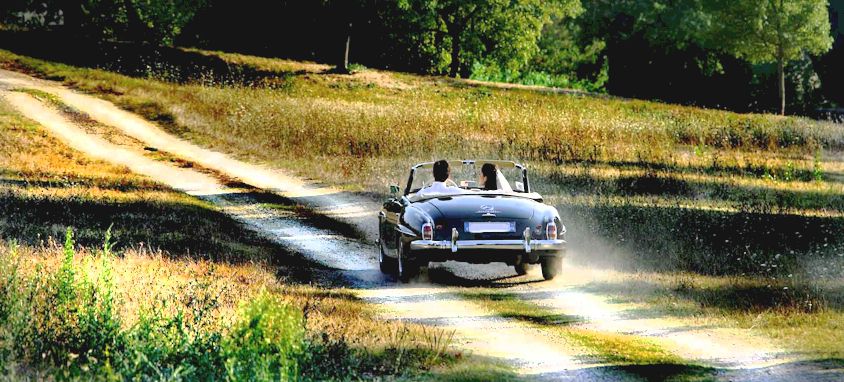
How to get around Tuscany is a bit of a vexed question. Between the larger towns, there is an excellent rail service with frequent trains all day. Smaller towns can be reached by bus, but the bus service is scheduled more for commuters than tourists. To explore the countryside, a car is by far the best way to go and, of course, many visitors to Tuscany rent a car for the duration of their stay. There is, however, an alternative strategy. "Should I rent a car or hire a driver to explore Tuscany?" Suppose you are here for two weeks but only five of those days are trips that require a car? Money-wise and for the reasons outlined, this might be the optimal alternative:

Don't rent a car in Tuscany: hire a driver.

For those of you who want to explore Tuscany efficiently, rather than renting your own car, consider hiring a private driver - a chauffeur, in other words - with his own vehicle. Yes, it will cost a bit more than a rental car but the advantages are numerous:
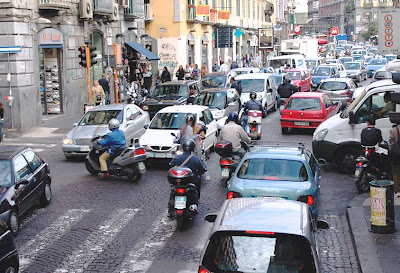
  • Instead of focussing on the narrow, twisting roads of Tuscany, you will be able to admire the views and identify the sights while you let your driver take care of the driving.
  • Planning your routes together with your driver - before you arrive, if possible - will allow you to visit more of your destinations in a shorter time - no time wasted on the wrong roads, slow speeds and closed sights. Plus, your driver will help you choose the most scenic routes where there are more than one.
  • Once you arrive at one of your destinations, your private driver will drop you off at the sight and then he'll take care of finding a parking place - often a problem with popular small Tuscan villages.
  • No more worries about bus lanes and limited traffic zones. A driver with an NCC license is allowed to drive into limited traffic zones where private drivers are prohibited. That means he can pick you up at your accommodations and drop you off again, as well as access sights with limited traffic zones.
  • Doing a wine-tasting tour is a popular activity among visitors to Tuscany. "Taste and spit" can be tiresome on day-long wine tasting tour. With your own driver, that issue disappears and you can enjoy yourselves freely.
  • Last but not least, your driver knows places that the guide books don't. Tell him or her your interests and ask for suggestions.
A minibus carries up to 7 or 8 passengers, will probably be air conditioned and provide WiFi access to the internet.

My recommended drivers are:

Tuscany Toscana
Don't forget to visit my Tuscany
Travel Guide!

Up-to-date news on what to see and where to stay in Chianti and all of Tuscany.

Tuscany Travel Guide

vacation accommodations in Tuscany


Author: Anna Maria Baldini

All content copyright © ammonet Italian Web Site Promotion 2024. All rights reserved.

Saturday, 12 October 2024

Il Palazzo di Bianca Cappello in the Oltrarno of Florence, Tuscany

Il Palazzo di Bianca Cappello in the Oltrarno of Florence, Tuscany

Il Palazzo di Bianca Cappello

During the first half of the 15 C, at Via Maggio 26, in the Oltrarno area of Florence, there was a palazzo belonging to the Corbinelli family, purchased in 1566 by Piero Buonaventuri, husband of the Venetian noblewoman Bianca Cappello. This palazzo was a setting of one of the most talked about love stories of the Renaissance, that between Bianca Cappello and Grand Duke Francesco de' Medici, son of Cosimo de' Medici. During the period in which they were still clandestine lovers, to meet secretly, Bianca and Francesco used an underground passage that starts from the cellars of the palazzo and reaches the Palazzo Pitti, a block away. During World War II, numerous art works from the Vasari corridor were stored in the passage for safekeeping. Today the passage is no longer passable.

Bianca Cappello

 Bianca Cappello

After Bianca was widowed, she was able to modernise and embellish her palazzo under the supervision of Bernardo Buontalenti and with financial support from Francesco. The façade was renovated with rich graffito decoration created by Bernardino Poccetti.

On 12 October 1579, Francesco I de’ Medici and Bianca Cappello married for the second time amongst great celebrations, despite the hostility of the Medici family. The ceremony between the Grand Duke and the "Daughter of Venice" followed the one that had taken place secretly in June of the same year.
After the wedding, Bianca donated the palazzo to the Hospital of Santa Maria Nuova and subsequently the grotesques were painted on the façade.

Grand Duke Francesco I de' Medici

This story remains intriguing right up until the present day, not least because of the tragic deaths of both Bianca and Francesco, within 24 hours of one another, at the Medici villa of Poggio a Caiano under suspicious circumstances that have never been clarified.

More about Francesco I de’ Medici and Bianca Cappello.

More about the Villas and palazzi of Tuscany.

Tuscany Toscana
Don't forget to visit my Tuscany
Travel Guide!

Up-to-date news on what to see and where to stay in Chianti and all of Tuscany.

Tuscany Travel Guide

vacation accommodations in Tuscany

Author: Anna Maria Baldini

All content copyright © ammonet Italian Web Site Promotion 2024. All rights reserved.

Tuesday, 16 January 2024

The Crystal Museum in Colle di Val d'Elsa reopens 2024

Colle di Val d'Elsa is a town of 20,000 people located above the valley of the river Elsa on the route of the ancient Via Francigena, the mediaeval highway frequented by pilgrims and merchants travelling to Rome from Canterbury and elsewhere in northern Europe.

Colle di Val d'Elsa

The main gate of Colle di Val d'Elsa

The Crystal Museum in Colle di Val d'Elsa opened in 2001 and is the only one of its kind in Italy. After being closed for some time, the Crystal Museum has recently re-opened.

The museum is located underground in the space once occupied by one of the furnaces of the 19 C Cristallerie e Vetrerie Schmidt and former the Boschi glass factory, a driving force of the economy of Colle di Valle d'Elsa from the 1920s and the early 1950s.

Crystal glass museum of Colle di Val d'Elsa

Crystal glass museum of Colle di Val d'Elsa

The exhibition starts with the display of some finds from the Middle Ages that can be attributed to the production of the 'gambassini', glassworks present in Colle di Val d'Elsa since at least 1331.

The different sections of the museum reconstruct the path taken by the local glass industry since 1820, the year the first furnace was installed. In that year the glassmaker Francesco Mathis opened a 'crystal' factory in Piano, near the church of Sant'Agostino. The business changed hands and Giovan Battista Schmidt took over production. The latter became known in Italy for the high quality and purity of the white glass and the attention paid to finishing the articles through grinding and carving techniques.

Colle di Val d'Elsa crystal

Colle di Val d'Elsa crystal

Lead crystal, discovered in 1963, marked a major turning point that characterised the entire second half of the 20 C, making Colle di Val d'Elsa known throughout the world as the 'City of Crystal'. Works of high-level craftsmanship, creations by famous designers as well as simple tableware have led the Colle di Val d'Elsa to produce up to 95% of Italian crystal and 15% of world crystal. The museum's itinerary, in the new layout of 2024, places the emphasis on those who made this development possible.

More about Colle di Val d'Elsa.

Visiting Colle di Val d'Elsa.


Tuscany Toscana
Don't forget to visit my Tuscany
Travel Guide!

Up-to-date news on what to see and where to stay in Chianti and all of Tuscany.

Tuscany Travel Guide

vacation accommodations in Tuscany

Author: Anna Maria Baldini

All content copyright © ammonet Italian Web Site Promotion 2024. All rights reserved.