Showing posts with label olive oil. Show all posts

Tuesday, 16 July 2019

How can we do an olive oil tasting in Tuscany?

Wine tasting is a favorite of visitors to Tuscany and there are numerous avenues to that activity. In contrast, I'm often asked by readers, "How can we do an olive oil tasting in Tuscany?" This is slightly more difficult to arrange. Although, of course, many Tuscan olive oil producers will let you taste their olive oil before buying, this doesn't help much because you've got nothing to compare it with - you're dependent on having an "educated" palate. What you need is to have an expert present you with 2 or 3 olive oils to taste while the differences are described to you. It could be two good but very different extra virgin olive oils from different locations (e.g. Lucca area and Chianti), or a very fresh olive oil and a two year old oil from the same farm, or a bottle of Turkish olive oil and a sample from Tuscany, or a second press oil and a cold-pressed, extra virgin olive oil. There are many interesting and illustrative comparisons, but the basic aim is to be able to distinguish a fresh, extra virgin olive oil grown (not just bottled) in Tuscany from other, often inferior, products.

Just a personal note: the colour of the olive oil doesn't necessarily tell you much. Grass is also a good source of chlorophyll! In southern Italy, where counterfeiting olive oil is, or anyway was, rampant, there is a group of tasters who use purple glasses to hold the oil they're examining so that they aren't influenced by the colour. Having said all that, a fresh, extra virgin oil should look deep green and might well be cloudy.

olive oil tasting in Tuscany
Extra virgin olives oil ready for an olive oil tasting.
 
For you olive oil tasting lesson, one option is to stay at an agriturismo where olive oil is produced and where the owner is able and willing to do a comparative tasting. Podere Felceto, a vacation villa located near Panzano in Chianti, does exactly that. In fact, the owners organise an olive oil evening where a light meal follows the tasting. Needless to say, there's plenty of their organic olive oil in the dishes as well as in the tasting glasses!

Another option is to take a day tour where an olive oil tasting is part of the programme. A good tour has either a driver-guide who is expert in comparing olive oils or who can take you to a producer who is expert.

More about the olive oil tasting evening at Villa Felceto in Tuscany.

More about the different commercial grades of olive oil.

Author: Anna Maria Baldini

All content copyright © ammonet Web Site Promotion 2013 - 2026. All rights reserved.

Thursday, 5 May 2016

Italian cured meats can now be imported into the USA - USDA lifts ban

Are you among the legions of American visitors to Italy who wanted to take home a whole prosciutto (or at least a good selection of salumi) but were disappointed to discover that the import of most Italian cured meats into the States has long been prohibited? Good news! It seems - note, seems - that from 28 May 2013, Italian cured meats can now be imported into the USA.

Italian cured meats can now be imported in to the USA
Italian cured meats - a new addition to what you can take home from Tuscany?

The USDA lifted its absolute ban on Italian raw, cured meat products in 1989, when prosciutto from Parma and San Daniele was allowed back into the USA after a 22-year absence. Now, according to ANSA, the Italian wire service, the USDA ban on the import of Italian cured meats from factories too small to support a full-time USDA inspector will be lifted starting on 28 May this year.

This is great news for visitors to Tuscany who now have the chance to extend their Tuscan experience by carrying back a good supply of their favorite Tuscan cold cuts. This also expands the options for convenient gifts for the folks back home - some salamini alla cacciatora here, a block of lardo toscano there. What could be a better way to share the experience? (And to "win friends and influence people" - it's not just the Napoleonic army that marches on its stomach!)

There is a huge array of Tuscan cured meats, many of them produced by small, artisanal outlets, that has never been available in the States. With a bit of luck, this will now change as importers move to fill what I believe is a true market void. In addition, there are good suppliers in Tuscany whose offerings can be ordered via the internet. 

HOWEVER, dear readers, the exact rules are still fuzzy and TUSCANY is NOT on the most recent list of Regions of Italy free of swine vesicular disease. Check back here - I will be updating as the USDA clarifies the new rules.

More about Tuscan culinary specialities.

Tuscan porcini mushroom - how to recognise, collect and cook them.

Bistecca all fiorentina - select and cook it properly.


Author: Anna Maria Baldini

All content copyright © ammonet Web Site Promotion 2013 - 2019. All rights reserved.

Thursday, 6 August 2015

An exceptional vintage is predicted for Chianti Classico 2015

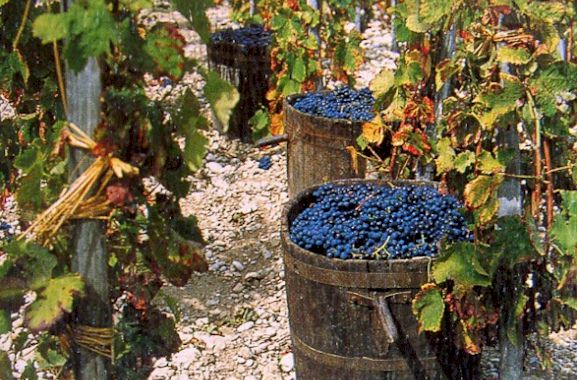
Very hot and dry weather conditions in Chianti mean an exceptional vintage is predicted for Chianti Classico 2015, according to the experts. This year will also be the second earliest vendemmia (grape harvest) since World War II, 2003, the year of a major drought, being the earlier harvest. Both quality and quantity of Chianti wine should be excellent this year, with estimated production rising at least 5% over last year, for an projected total of about 44 million hectoliters.

exceptional vintage for Chianti Classico 2015

The additional production should keep prices stable so watch for the Gallo Nero label of Chianti Classico 2015 when the wine reaches the shops in spring next year. The Riserva will appear on the market starting from late 2016.

As with all Chianti Classico wine, cellar your bottles for 5 to 6 years, not more. Some can be drunk even sooner, but they should not be kept for much longer than that period. In contrast to claret, for example, Chianti Classico is best consumed quite young.

Tuscan Extra Virgin Olive Oil harvest 2015


Tuscan olive oil

Based on my olive trees and those I have seen in central Chianti, this year's olive oil production in Tuscany will be infinitely better than the disastrous harvest of 2014. It looks as if it was cold enough during winter to inhibit the life cycle the Bactrocera oleae, the fruit fly that lays its eggs in the olives whence, eventually, the larvae eat their way out, destroying the fruit. Four days of frost kill the eggs. Last winter was the warmest on record in Tuscany and was followed by warm, humid conditions, ideal for fruit flies.

Until now the bacterium that is wiping out olive trees in southern Italy has not made an appearance in Tuscany. Xylella fastidiosa is a bacterium carried by aphids and has spread quickly through the olive trees of Apulia. This is particularly tragic because some of the olive trees there, in contrast to those in Tuscany, are up to a thousand years old. We are praying that the disease is brought under control before it spreads to Tuscany.

Tuscan wine tours and winery vacation rentals.

Tuscany Toscana
Don't forget to visit my Tuscany
Travel Guide!

Up-to-date news on what to see and where to stay in Chianti and all of Tuscany.

Tuscany Travel Guide


vacation accommodations in Tuscany

Author: Anna Maria Baldini

All content copyright © ammonet Infotech website promotion 2015. All rights reserved.