Saturday, 13 April 2019

Villas of Florence and the 19th century photographer Longworth Powers

When I have a free hour or two - an increasingly rare event - I like to wander the byways of Florence in search of less known corners of beauty and history. Viale Poggio Imperiale, starting at Porta Romana and running uphill all the way to Arcetri is one productive hunting ground, lined as it is with beautiful villas, each with a story to tell. The avenue leads to the Medicean Villa del Poggio Imperiale which belonged to the Medici Grand Ducal family from 1565 until 1738, but which reached its architectural peak under the Habsburg Lorraines, the successors to the Ducal Medici as rulers of Florence and owners of the villa. It later became, and still is, an exclusive girls' boarding school, the Istituto Statale della Ss. Annunziata, but the magnificent imperial rooms are open to the public one day a week.

Villa Poggio Imperiale in Florence, Italy
One of the imperial rooms of Villa Poggio Imperiale in Florence, Italy

A more modest but in some ways much more attractive villa on Poggio Imperiale belonged to Longworth Powers, a sculptor and photographer. Longworth was the son of Hiram Powers (1805 - 1873) who was an extremely successful American neoclassical sculptor, Swedenborgian and spiritualist, who moved to Florence in 1837 and settled on the Via Fornace, where he had access to good supplies of marble and to traditions of stone-cutting and bronze casting. He remained in Florence until his death, turning out marble busts and statues that were often reproduced in large numbers by his workmen and which sometimes fetched thousands of dollars. His studio was a fashionable stop on any American's grand tour. One of Longworth's brothers, Preston Powers, followed in his father's footsteps, first in America and then in Florence, but without success, and he died penniless in Florence in 1931.


The Longworth family in Florence
The Longworth family in Florence - Hiram top centre.

Longworth Powers was eventually more successful than his brother Preston. He was the eldest son of Hiram and in his early life he struggled to establish a career, failing to persevere at any task for long, a fact that continually frustrated his successful father. Longworth enrolled at the United States Military Academy at West Point, where his family hoped that the education and discipline would would have beneficial effects, but he was "asked to leave" after only one semester. He then attended Rensselaer Polytechnic Institute in upstate New York, but failed to stay long enough to earn a degree. His father thought Longworth might do better in Florence and so put him to work as bookkeeper in his studio while teaching him the basics of sculpture. Longworth created portrait busts and idealised pieces in a softer more romantic neoclassical style than his father, but his interest soon waned, and Hiram sent him back to America.

Flora a sculpture by Longworth Powers
Flora (1880) is clearly indebted to Hiram Powers's allegorical busts but in a more romantic style

By 1860, Longworth was back in Florence and began working as a photographer. He was a great success, creating portraits of the prominent men and women in the city, as well as selling photographs of Florentine landmarks and works of art. He created a great many plaster busts of the famous and not so famous visitors and residents in Florence and bought himself a villino on Viale Poggio Imperiale, with an annex which he turned into a photographic studio.

The villa of Longworth Powers on Viale Poggio Imperiale
The villa and studio of Longworth Powers on Viale Poggio Imperiale


The Powers Villa in Florence - living room
The living room of the Powers villa in Florence - high Victorian!
Photographs and plaster busts by Longworth Powers still come up on the market. His photographic portfolio in preserved in the Gabinetto Vieusseux. Alas, a search of the Florence white pages suggests that the Powers family is extinct here.

Tuscany Toscana
Don't forget to visit my Tuscany
Travel Guide!

Up-to-date news on what to see and where to stay in Chianti and all of Tuscany.

Tuscany Travel Guide

Author: Anna Maria Baldini

All content copyright © ammonet Italian Web Site Promotion 2019 - 2020. All rights reserved.

Sunday, 7 April 2019

Exhibition of drawings at the Museum Horne, Florence

A wonderful exhibition of drawings at the Museum Horne, Florence under the title "Souvenir d'Italie" has just opened and will continue to be on show until 30 July, 2019. These drawings, selected around the theme of travels in Italy, are from the collection of Herbert Horne.

exhibition of drawings at the Museum Horne, Florence
An exhibition of drawings at the Museum Horne, Florence until 30 July 2019

Herbert Percy Horne was born in London in 1864. He was an amazing man who crammed a huge amount into a tragically short life (he was only 52 years old when he passed away in Florence in 1916). Horne was an architect and a man of many interests in the fields of art, including font design, literature and music. He was an associate of the Rhymers' Club in London and he edited the magazines The Century Guild Hobby Horse and The Hobby Horse for the Century Guild of Artists.

Herbert Percy Horne
Herbert Percy Horne
Horne first visited Italy in 1889 and kept an illustrated journal of his travels, and art and architectural research. His monograph on Sandro Botticelli from 1908 is still recognised as of exceptional quality and thoroughness. Later in life, he settled in Florence, restoring a Renaissance palazzo into which he eventually moved. He donated his collection of arts and handicrafts of the 14 C and 15 C to create the Museo della Fondazione Horne in Florence.

A room in the Museo Horne, Florence
The museum is housed in the Palazzo Corsi. The Palazzo, the seat of the Museo Horne since 1921, was built on the site of a 13 C building belonging to the Alberti family. It owes its current appearance to a plan for renovation and enlargement commissioned by the brothers Luigi and Simone Corsi from Simone del Pollaiolo, nicknamed ‘il Cronaca’, between 1495 and 1502. The Palazzo Corsi was the property of the Corsi for three centuries, until it passed to the Nencini family in 1812, then to the Fossi family, and in 1896 to the Burgisser family who sold it to Herbert Horne. Horne bought this 15 C “palagetto”, or small palace, in via de’ Benci in 1911 and proceeded to restore it with the aim of creating not so much a museum as a perfect example of the kind of house in which a wealthy Renaissance noble or merchant would have lived. The furnishing of the rooms was completed after his death in 1916 by Count Carlo Gamba and Giovanni Poggi.

A watercolour of the Arno at Firenze looking towards the Ponte alla Carraia, by John Thomas Serres 1790.
Detail of a watercolour of the Arno at Firenze looking towards the Ponte alla Carraia,by John Thomas Serres 1790.

"St. Stephen" by Giotto in the Horne Museum, Florence

The museum houses a unique and extremely valuable collection of paintings, sculptures, ceramics, goldsmith’s work and other artefacts, furniture, plaquettes, seals, fabrics, cutlery and a variety of household and kitchen utensils dating back for the most part from the 14 C to 16 C. The Horne Museum should not be missed during a visit to Florence, and the current exhibition of drawings from Horne's collection makes a visit all the more worthwhile.

More about the Museo Horne.


Tuscany Toscana
Don't forget to visit my Tuscany
Travel Guide!

Up-to-date news on what to see and where to stay in Chianti and all of Tuscany.

Tuscany Travel Guide

Author: Anna Maria Baldini

All content copyright © ammonet Italian Web Site Promotion 2019 - 2021. All rights reserved.

Friday, 22 March 2019

Apartment to rent in a small town or village in Tuscany

I often see enquiries on travel forums, from travellers preparing for their trip to Tuscany, requesting a recommendation for an apartment to rent in a small town or village in Tuscany. They have the right idea! There's no better way to enjoy and really understand life here in Tuscany than by renting a self-catering vacation apartment outside of the main centres. And it's economical as well! Today I want to describe just such a place, namely Appartamento Saverio in Greve in Chianti which sleeps 4 in a double room and a twin room, and can sleep two more on a sofa bed.

Apartment to rent in a small town or village in Tuscany
An apartment to rent in a small town or village in Tuscany
The apartment that I'm recommending today is situated right on Piazza Matteotti, the arcaded, main piazza of the small town of Greve in Chianti. Greve has around 14,000 inhabitants and is located on the scenic via Chiantigiana, the main road between Florence and Siena. Greve is accessible by bus from Florence (60 minutes to the centre of Florence) and Appartamento Saverio is a five minute walk from the bus stop, meaning that you don't need a car to get here nor to make excursions to Florence. There is a good supermarket in the town plus numerous restaurants and food outlets, many of them around Piazza Matteotti. And yet, in most directions, a 15 minute stroll takes you out into the vineyards and olive groves, and the mediaeval walled village of Montefioralle is just a mile away.

The apartment is large and both the structure and the furnishings are typically Tuscan, with a huge fireplace in the living room. In fact, the buildings around Piazza Matteotti date back several hundred years. Appartamento Saverio has two modern bathroom and a huge terrace that overlooks the piazza. A great place for a dinner al fresco or just to sit and enjoy the sun while watching the activity of the piazza. In essence, if you're looking for an apartment to rent in a small town or village in Tuscany, Appartamento Saverio should be at or near the top of the list!

More about Tuscany Holiday Apartment "Saverio" in Greve in Chianti.


All content copyright © ammonet Web Site Promotion 2012 - 2019. All rights reserved.

Saturday, 16 March 2019

Exhibition in Florence dedicated to Verrocchio at the Palazzo Strozzi and the Bargello

A fabulous exhibition in Florence dedicated to Verrocchio at the Palazzo Strozzi and the Bargello joins the list of unmissable art shows hosted by the Palazzo Strozzi over the years.

From 9 March to 14 July 2019, over 120 paintings, sculptures and drawings from art galleries and museums in a number of countries is on display. They include wonderful works by Verrocchio, the teacher of Leonardo da Vinci, as well as works by the best-known artists associated with his workshop in the second half of the 15 C, among them Domenico Ghirlandaio, Sandro Botticelli, Pietro Perugino and Leonardo da Vinci, his most famous apprentice. The curators have attempted to illustrate Leonardo’s early artistic career and interaction with Verrocchio by juxtapositions.

Verrocchio's Dama del Mazzolino, viewed from behind
Verrocchio's Dama del Mazzolino, viewed from behind, in the Bargello.
Verrocchio was born in Florence ca. 1435 to Michele di Francesco Cioni, a tile and brick maker, and later a tax collector. Little is known about his life but he was initally apprenticed to a goldsmith. There is no real evidence that he was later apprenticed to Donatello and verylittle evidence that he trained as a painter under Fra Filippo Lippi. His main works are dated in his last twenty years and his advancement owed much to the patronage of Lorenzo de' Medici and his son Piero. His workshop was in Florence where he was a member of the Guild of St Luke. Several great artists including Leonardo da Vinci and Lorenzo di Credi passed through his workshop as apprentices, and artists such as Domenico Ghirlandaio, Francesco Botticini and Pietro Perugino probably worked in some kind of association with Verrocchio. Their early works can be hard to distinguish those of Verrocchio. At the end of his life, he opened a new workshop in Venice where he was working on the statue of Bartolomeo Colleoni, leaving the Florentine workshop in charge of Lorenzo di Credi. He died in Venice in 1488.

The Baptism of Christ by Verrocchio and Leonardo
The Baptism of Christ by Verrocchio - the angel to the lower left is very likely by Leonardo.

The exhibition is part of the programme of celebrations marking the 500th anniversary of Leonardo’s death and is the first retrospective ever devoted to Verrocchi. Don't miss it!


Tuscany Toscana
Don't forget to visit my Tuscany
Travel Guide!

Up-to-date news on what to see and where to stay in Chianti and all of Tuscany.

Tuscany Travel Guide

vacation accommodations in Tuscany


Author: Anna Maria Baldini

All content copyright © ammonet Italian Web Site Promotion 2019. All rights reserved.

Monday, 11 February 2019

How to get from the airport to central Florence

Many first time visitors to Tuscany ask me how to get from the airport to central Florence. And of course I have to ask them to specify which airport. Florence is served mainly by Pisa Airport (Aeroporto Galileo Galilei - code PSA) and to a lesser extent by its own small Florence Airport (Aeroporto Amerigo Vespucci, often known as Peretola - code FLR). I have heard but cannot confirm that sometimes long distance passengers have tickets specifying Florence as the destination when in fact they will land at Pisa. Be sure to check that and to check whether subsequent ground transport is included.
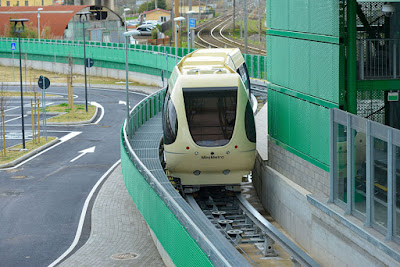
The Pisamover light railway from Pisa Airport to Pisa central railway station.

There are three different ways to travel from Pisa Airport to Florence - by train, by bus or by taxi


By train: The new, fast and fully automatic PisaMover light rail runs from Pisa Airport to Pisa Central Railway Station every 5/8 minutes every day, from 6 a.m. to midnight, and the journey takes 5 mins. The airport stop is in via Pier Giorgio Ballini, 40 m from the Passenger Terminal, and it arrives at platform 14 in the Pisa railway station. It has an intermediate stop at San Giusto/Aurelia station, where you’ll find two parking areas with about 1,400 spaces, open 24 hours a day, every day.

By bus: the notoriously unreliable Terravision bus is apparently still running and when there is no issue with traffic it is slightly faster than by train (around 70 minutes) and a ticket costs about 5 - 10 euros. Return and children's tickets cost less. Terravision bus timetables here. [Note March 2017 - Terravision is not running currently and their booking form yields "Not available". It is unclear whether or not this is permanent.]

Other bus services from Pisa Airport to Florence are Autostradale and Sky Bus Lines Caronna (the latter with multiple stops en route).

The choice between train and bus will very likely depend on the next train departure time but, taking traffic problems and comfort into account, along with the new PisaMover, my recommendation is to take the train.

There are other bus services from Pisa Airport to Lucca, Siena, Montecatini, Pistoia and Prato.

Beware of gypsy and other pickpockets when there is a scrum during boarding of the Terravision bus.

By taxi: A metered taxi will cost you about 150 euros or more because you have to pay the driver to return empty (that's included in the meter reading - the driver doesn't double the displayed price). There are also fixed-fare NCC minibuses that can be reserved in advance. This latter option costs about the same as a taxi base rate but the drivers are usually more familiar with country accommodations and so provide a good option if your have several people, a lot of luggage and will be staying in the country. Both people and baggage will cost extra with a taxi. NCC drivers can be booked for times when trains, buses and rental car offices are not active. Finally, you can rent a car, but do not try to drive it into central Florence (or Pisa, for that matter) where there are camera-patrolled limited traffic zones and fines aplenty.

Florence airport
Florence airport

There are three different ways to travel from Florence airport to central Florence.


By tram: Florence's new T2 tram route, which opened to the public at 2:30pm on 11 February 2019. The new line operates between piazza dell'Unità Italiana (main railway station - SMN) and Florence Airport.

By bus: Florence airport is only 4 km from the Florence city centre and the Volainbus bus shuttle takes about 20 minutes, runs every half an hour and costs about 5 euros. It leaves from the SITA bus station near the SMN railway station and from near the taxi rank at the station itself. Departures from city centre are every 30 min from 5.30 am to 8.00 pm, then after every hour up until 11.00 pm. Check timetable details on the ATAF website. I do not see the point of taking this bus, which can be delayed by traffic, when the tram is just as fast, more frequent and costs less.

STOP PRESS The VOLAINBUS - FIRENZE AIRLINK service is temporarily suspended until 28 June, 2022

By taxi: A metered taxi has a fixed price for trips to the airport (currently 20 euros), takes 15 minutes and is obviously a good choice if you are 3 or 4 people and/or want to leave directly from your hotel. Picking up and dropping off your rental car at the airport is generally a good idea because you avoid the limited traffic zones in the city centre.

A taxi will cost 20 Euros, plus 1 Euro for each piece of luggage (maximum 5 Euros). There is also a 2 Euro supplement for Sunday service and a 3.20 Euro supplement for night service (22:00 to 6:00). Consequently, the "break-even" point for using the airport bus is 3 or 4 passengers traveling together.


Some recommended fixed-fare NCC minibus drivers.

Getting around in Tuscany.

Warnings regarding limited traffic zones in Tuscany.

Recommended vacation accommodation in Chianti towns, villages and countryside.


vacation accommodations in Tuscany

Author: Anna Maria Baldini

All content copyright © ammonet Web Site Promotion 2012 - 2021. All rights reserved.

Monday, 26 February 2018

Guided tours and wine tastings in Tuscany

I've just done a tour in Tuscany with a Tuscan driver guide that I hadn't met before. That's Sergio Ceccherini who does guided tours in Tuscany, both traditional and some with a very original twist. His English is flawless and it was a great tour. I've done private guided tours in Tuscany before and this was equal with the best of them, therefore a strong recommendation for Sergio and his Tuscany wine tours from me.

guided tours in Tuscany
Guided tour with driver guide Sergio Ceccherini

"Traditional" Tours

Chianti Scenic Tour. Wine Tasting. Everything the Chianti region has to offer.

Arezzo and Cortona. Under the Tuscan Sun Tour.

Sienna and San Gimignano Tour. In addition to the town tours, includes top quality wine tasting.

Pisa and Lucca Tour. The famous tower of Pisa plus a visit to the less touristy but very charming town of Lucca.

Brolio Castle and Chianti Wine Tasting Tour. A very "castle-like" castle, the history of Chianti, wine tasting, Tuscan lunch.

"Novel" Tours

Private Photo Shoot and Tuscany Wine Tasting With Home Cooked Lunch.


Wine Making in Tuscany - Become a Wine Maker for a Day. 

Tuscan winery lunch and winetasting
More about Sergio's Tuscany wine tours from Florence.

*************


Chianti Tourist Information - tourist information


Tuscany Toscana
Don't forget to visit my Tuscany
Travel Guide!

Up-to-date news on what to see and where to stay in Chianti and all of Tuscany.

Tuscany Travel Guide

Author: Anna Maria Baldini


All content copyright © ammonet Italian Web Site Promotion 2017 - 2018. All rights reserved.

Tuesday, 23 May 2017

The parish church of Santa Maria and San Leonardo in Artimino, Carmignano, Tuscany

Today I want to return to one of my obsessions, the abbeys, monasteries and churches of Tuscany, in this case, specifically, the parish church of Santa Maria and San Leonardo in Artimino, at Carmignano in the Province of Prato (in Italian, La pieve di S. Maria e S. Leonardo ad Artimino, Comune di Carmignano, Prato). We are lucky in Tuscany that stone is readily available (ref. my husband's fields) and consequently almost every building in Tuscany is, in essence, a skilfully assembled pile of stones that lasts for millennia. Some of these structures are aesthetically indifferent - some are works of genius, even when they are pure vernacular art - meaning erected by now anonymous workmen with no special skills other than a miraculous feeling for beauty. The Pieve di S. Maria e S. Leonardo ad Artimino is one of these works of genius. It's located deep in the countryside and consequently rarely visited by visitors to Tuscany. This church has miraculously remained embedded in a pristine natural environment. If you're in the area, on no account miss paying it a visit.

La pieve di S. Maria e S. Leonardo ad Artimino, Comune di Carmignano, Prato
The parish church of S. Maria e S. Leonardo ad Artimino
This pieve is referred to in the famous decree of Emperor Otto III, dating from 998, which lists the privileges of the Bishop of Pistoia, also noting "plebs ... in Artimino", which is perhaps referring to a time before the existence of the inhabited settlement of Artimino. The latter was a walled town, documented, however, as "castle" since the 11 C. The then church of San Leonardo was located outside the walls of the castle. This was commonplace during that period, because territorial organisation was characterised by scattered settlements and distinct power centres: the castle and the pieve. The Rinaldeschi of Prato and then the Frescobaldi were the patrons for a long time.

The church was first devoted to the Virgin only during the 16 C and from then onwards was co-dedicated to the Virgin and San Leonardo. In its role as a parish church, the pieve of Santa Maria and San Leonardo in Artimino was the headquarters of several suffragan churches. In the 19 C, it had as its dependencies Santo Stefano alle Brusche at Poggio alla Malva, San Michele in Comeana and San Martino in Campo.

Interior of the Pieve di S. Maria e S. Leonardo ad Artimino

The pieve as a structure is one of the most complete, evocative and early examples of Romanesque architecture of the 11 C in Tuscany. The original buildings have remained intact over the centuries, apart from the construction of the vault cover in the 14 C and the construction of the canonical and "della Compagnia" buildings. The impression formed by the Romanesque elements has been enormously enhanced by the radical restoration of 1971 that eliminated additions of little value and also resulted in the removal of interior decorations of the 17 C and 18 C.

More about the Basilicas, Pievi, Abbeys, Monasteries and Hermitages of Tuscany.


Tuscany Toscana
Don't forget to visit my Tuscany
Travel Guide!

Up-to-date news on what to see and where to stay in Chianti and all of Tuscany.

Tuscany Travel Guide

vacation accommodations in Tuscany


Author: Anna Maria Baldini

All content copyright © ammonet Italian Web Site Promotion 2017. All rights reserved.

Tuesday, 9 May 2017

Barack and Michelle Obama will be relaxing in the Val d'Orcia of Tuscany next week.

Barack and Michelle Obama are currently in Milan for a conference on climate change. They are expected to be relaxing in the Val d'Orcia of Tuscany next week, the third week of May, 2017.


Barack and Michelle Obama on vacation in Tuscany during May 2017

The Obamas will very likely to stay at Borgo Finocchieto near Buonconvento in the Val d'Orcia of Tuscany. Borgo Finocchieto is the property of John Phillips who ended his term as US Ambassador to Italy a few days ago. John Phillips is an American of Italian ancestry who purchased the property in 2001 and spent the next eight years renovating. I think we can safely assume that President and Mrs Obama will have a very comfortable time there in one of the most beautiful areas of Tuscany, especially since the weather forecast is extremely favorable.

If we (meaning your humble blogger, Anna Maria Baldini) can obtain some photos, we'll post them here. (Why have I lapsed into the royal "we" as soon as the presidency comes up?)

Buonconvento, Tuscany
Buonconvento

Michelle Obama visiting Montalcino in Tuscany, Italy
Michelle Obama enjoying Montalcino in Tuscany

The Obamas visit the Duomo of Siena

We wish President and Mrs Obama a wonderful stay in Tuscany!

More about the Val d'Orcia, Tuscany.


Tuscany Toscana
Don't forget to visit my Tuscany
Travel Guide!

Up-to-date news on what to see and where to stay in Chianti and all of Tuscany.

Tuscany Travel Guide

vacation accommodations in Tuscany


Author: Anna Maria Baldini

All content copyright © ammonet Italian Web Site Promotion 2017. All rights reserved.

Wednesday, 1 February 2017

I've been to Tuscany before. What should I see this time?

Today I want to try to provide some hints on the amazing diversity of Tuscany. More than once, readers have written to me to say "I've been to Tuscany before. What should I see this time?" To research your next trip to Tuscany, you basically need to list the aspects that you've already experienced and then to expand your options. Here are some ideas.

Art, yes, done that - then what about architecture as such? Renaissance architecture, yes, done that - then what about vernacular architecture? Head out into the Tuscan countryside and follow some of those quiet, narrow roads - they all lead somewhere, as often as not to farmhouses and hamlets that have grown over the centuries from mediaeval watch towers. It's this almost random agglomeration that gives much of Tuscan vernacular architecture its charm. Tuscany is also dotted with ancient monasteries and parish churches created in the same spontaneous manner. Because they are all invariably built of stone, you'll have no trouble finding inhabited structures documented as dating back to before the year 1000. Settle down in an ancient courtyard for a picnic and enjoy the atmosphere as well as the architecture!

Vernacular architecture in Tuscany

Wine tasting at a winery, yes, done that. But was it at some industrial scale place with several minibuses (or touring buses) parked about the place? From about April onwards, the grape vines begin to sprout and the Tuscan countryside takes on a deep green colour. Right up until the vendemmia in September, it becomes a real pleasure to stroll along the strade bianche that traverse the vineyards and visit one of the many small, traditional wineries of Chianti and elsewhere in Tuscany. You don't need to book in advance - if someone is available, you'll be able to look around and taste the two or three wines that they make. Look for the roses planted at the ends of the rows of grape vines - like canaries in a mine, they warn of imminent danger, in this case mildew. Some wineries still grow crops between the rows of vines, among them irises (giaggioli), the roots of which are harvested for extraction of a stabiliser used in perfumery. Mixed cultivation like this is a reflection of the old coltura promiscua common even in the early 20 C.

Irises planted between rows of grape vines in Tuscany

Walking tour, yes, done that. A walking tour of Florence, maybe, but what about the numerous walking paths from one village to another. Some are hilly, that's true, but there are others that are no more than a bucolic stroll. These are popular among Tuscans too, especially if there's a chance to dress up in ancient costumes like the group of pilgrims below on their way to Monteriggioni. There are several excellent guide books describing the most popular routes plus the villages and wineries that you will encounter along them. This is really a great way to get to know the real Tuscany and real Tuscans!

A country stroll under the walls of Monteriggioni,Tuscany
A country stroll under the walls of Monteriggioni.

Go to the seaside, yes, done that. To Forte dei Marmi? Many people, including a very large number of Italians, enjoy nothing better than lying in a deck chair under a sun umbrella in neat rows with hundreds of other like-minded sun worshippers at Tuscan beaches. But Tuscany has numerous stretches of truly beautiful coastline and charming fishing villages, especially in its off-the-beaten-track southwest, around Monte Argentario and Talamone. Here you can swim, go boating or diving around interesting rocky promontories and dine in excellent fish restaurants. Also see my post of the delightful beaches and old town of Castiglione della Pescaia.

Talomone port on the Tuscan coastline

In future posts, I will have more suggestions on how to refresh yourselves with new and interesting sights in Tuscany. For now, don't forget: one of the objects of a vacation is to relax, and there is no place that offers a greater variety of tranquil locations combined with wonderful weather and views than Tuscany. See you here soon!

Relax in Tuscany
Relax in Tuscany.

Sights, activities, events and places to stay in Tuscany.

Vernacular art of Tuscany.

Vacation accommodation in Tuscany
www.bella-toscana.com


All content copyright © ammonet Italian Web Site Promotion 2014 - 2022. All rights reserved.

Thursday, 5 January 2017

Chiocchio, the castle of Mugnana and the Cintoia valley in Chianti, Tuscany

Chiocchio is a village on the Via Chiantigiana that wanders from one villa and farm to another along the ridges of Chianti, Italy between Florence and Siena. In early times, Chiocchio was a fairly important crossroads with a road running to the Castle of Mugnana which was probably built on the remains of Ad Aquileia, a Roman way-station on the Via Cassia. The castle represents a typical case of the 14 C transformation of a castle into a single-family, private residence. It belonged to the Bardi family of Florence during Renaissance times and later.

The Castello di Mugnana near Chiocchio in Chianti, Tuscany
The Pieve (Parish church) of San Donato a Mugnana is located nearby and was for long a dependency of the Castle of Mugnana. Although much reconstructed over the centuries, the Pieve di San Donato a Mugnana is a Romanesque foundation.

The Pieve of San Donato a Mugnana near Chiocchio
From the via Chiantigiana, I recommend making an excursion by taking the turn to the east a short distance to the south of Strada in Chianti, to explore the beautiful Valley of Cintoia by driving to La Panca and then rejoining the via Chiantigiana at Greve in Chianti.

The Castle of Cintoia might take its name from the Roman expression "centuria", an area of ground of about 50 hectares but it is more ttle of the original castle remains, having been replaced by some large farm houses.
Castle of Cintoia in Chianti, Tuscany


All content copyright © ammonet Infotech 2011 - 2017. All rights reserved.

Thursday, 29 December 2016

Is it possible to visit a privately-owned Tuscan Renaissance villa?

While some of the most famous Tuscan villas, especially the Medicean villas of Tuscany, are now publicly owned, there are large numbers of Tuscan villas, some with spectacular gardens, that are still in private hands. Not surprisingly, readers ask me whether it is possible to visit a privately-owned Tuscan Renaissance villa. The answer is that a number of them are accessible and I'll be providing details here and in later posts.

Villa Poggio Torselli


Villa Poggion Torselli in Tuascany, Italy
Villa Poggio Torselli in Tuscany, Italy

Villa Poggio Torselli is a magnificent Tuscan villa located near San Casciano in Val di Pesa just a few km from Florence, and the location of one of the finest italianate gardens in Tuscany, if not the whole of Italy. This villa belonged to the Machiavelli family and later to a long line of Tuscan aristocrats. They also owned the nearby Castello di Bibbione. Niccolò Machiavelli, Renaissance historian, politician, diplomat and writer, and the most famous member of his family, did not live in this villa. When not in disgrace, he lived in Florence except when abroad (meaning away from Florentine territory) on diplomatic missions. When banished from Florence, he lived in his country retreat, Albergaccio Machiavelli, which is to be found at Sant'Andrea in Percussina, not far away from Villa Poggio Torselli.

Niccolò Machiavelli
Niccolò Machiavelli

Villa Poggio Torselli is particularly famous for its gardens.
These gardens probably date from the late 17 C, and consists of an italianate garden divided into two terraces to the south and an English park area in to the north. In the upper terrace on the south side, the original arrangement with flower beds has been preserved along with a very ingenious irrigation system, one of the best preserved of Tuscany. It was designed with stone basins positioned to favour the flow of water from the highest point to the lowest. The parterre was transformed in mid 19 C according to the English style, but was restored first around 1925 when the box hedging was renewed and then by the present owners, who uncovered one of the original flowerbeds with its irrigation basins.

The conservative restoration called for a renewal of the planting typical of late 18 C gardens. Dwarf fruit trees, old-fashioned roses, aromatic herbs and flowers were planted and act as a frame for the baroque chapel and the architecture of the three-storey villa. When the weather is warm, the potted citrus trees are carried out from the splendid limonaia into the open air.

In addition, the beautiful landscape offers sweeping views of lush greenery extending over about 42 hectares, 25 of which are given over to vineyards and 13 to olive groves.

The giardino all'italiana of Villa Poggio Torselli

The Poggio Torselli villa itself is one of the largest, most prestigious and elegant villas found in the hills of San Casciano in Val di Pesa, in the Chianti Classico region of Tuscany. It was once known as the “queen of the villas”. The villa was built on the site of an earlier structure between the late 1600s and early 1700s by Lorenzo Merlini, an architect who was very popular with the Florentine nobility of the day.

The villa consists of a central block and two L-shaped wings which house apartments and offices, a chapel and winter garden. To the south, the wings enclose the giardino all'italiana. The interiors are characterised by colour, tromp l’oeil and allegorical paintings, created at the end of the 17 C by Pier Dandini, Matteo Bonechi and their students. Don't miss the ceilings of the two rooms adjacent to the main hall on the ground floor. You can reach the luxurious rooms and parlours on the upper levels via an astoundingly beautiful staircase.

The salotto of Villa Poggio Torselli

More about the gardens of Villa Poggio Torselli.

More about the villas of Tuscany

More about Tuscan villa gardens

Tuscany Toscana
Don't forget to visit my Tuscany
Travel Guide!

Up-to-date news on what to see and where to stay in Chianti and all of Tuscany.

Tuscany Travel Guide


vacation accommodations in Tuscany

Author: Anna Maria Baldini


All content copyright © ammonet Italian Web Site Promotion 2023 - 202. All rights reserved.