Showing posts with label Food. Show all posts

Monday, 27 April 2026

How to tell real gelato from industrial confection

These days gelato is quite expensive in most towns in Italy - sometimes as much as 7 euros for a big cone or cup. It's therefore important that you buy real gelato, meaning gelato made in-house from fresh fruit and other pure natural ingredients, and not some kind of confection produced in a factory. Here are some tips on what to avoid.

Ignore the word "artigianale" on the signs and labels. This word has no legal standing in Italy so anyone can use it, even for factory produced products vaguely resembling gelato.

Industrial gelato

Industrial gelato

  • Unnatural colours: If the colours are bright, almost fluorescent, you're looking at a confection. Genuine banana gelato is more or less beige, almost grey. It is NOT bright yellow. Lemon sorbet is white. The chocolate gelato should be a deep chocolate colour, not a brownish colour of artificial caramel. Frutti del bosco will have a deep blackberry colour.

  • Mountainscape display: If the gelato is piled up high, it's being held together using emulsifiers and hydrogenated fats, often palm oil. Genuine gelato cannot stand up in heaps, especially whipped up or in heaps of round "scoops". It will lie flat in the container ("pozzetto"). Unless there's a queue of customers, the gelato containers will usually be covered with a metal lid to maintain the correct temperature. The gelato will not be decorated with fruit, biscuits etc.

  • Too many flavours:   Depending on the size and popularity of the gelataria, there will be only between 6 and 10 flavours on any given day. A real gelataio makes a small batch of gelato in the morning, sells what is there and starts again the next day.

  • Out of season fruit: This one is obvious. If the fruit used to make the gelato is fresh, it has to be in season. Bright red strawberry ("fragola") gelato displayed in December is made from strawberry essence and artificial syrup, like those strawberry daiquiris sold in New Orleans.

  • Unnatural names: "Bubblegum" is not a flavour of real gelato. Too many or, in fact, any labels like this scream factory-made confection and suggest that everything on display is composed mostly of artificial ingredients.

  • Ingredients list: Every Italian gelateria is legally obliged to display lists of the ingredients. A short list with milk, cream, sugar, fruit and egg yolks is good. A list including "olio vegetale" and numbered colour codes - "E" this and "E" that, "aromi," and emulsifiers again screams factory-made confection. 

Real gelato

 Real gelato

Try to find a place with a short queue of buyers who look as if they live nearby. That's a sure indicator of the real thing!

Best gelato in Tuscany.

Tuscany Toscana
Don't forget to visit my Tuscany
Travel Guide!

Up-to-date news on what to see and where to stay in Chianti and all of Tuscany.

Tuscany Travel Guide

vacation accommodations in Tuscany

Author: Anna Maria Baldini

All content copyright © ammonet Italian Web Site Promotion 2013 - 2026. All rights reserved.

Monday, 5 January 2026

Events and festivals in Tuscany during 2026

The new year has begun and now is the moment to think about events and festivals in Tuscany during 2026. If you're planning a trip to Tuscany, do look at our lists of folkloric festivals, jousts, archery and crossbow contests and numerous other events that take place in Tuscany during the course of the year. These range from the massive float parades of the Carnevale in Viareggio through the great mediaeval costume festivals to simple village food feste.

Events and festivals in Tuscany
Huge processional float at Viareggio Carnevale

The festivals of Tuscany have become more and more polished and exciting in their presentation and yet remain genuine folk festivals dependent entirely on the enthusiasm of the local organisers, in many cases these being competing local contrade, rioni etc. These latter are clubs and societies based on the various residential quarters of villages, towns and cities, the most famous being the contrade of Sienna which enter their horses (and riders) in the famous Siena palio twice every year.

Siena palio
 The Palio in Sienna, Tuscany

In addition to annual or twice yearly events, there are always "unscheduled" occasions to see and even participate in Tuscan folkoric activities. Keep your eyes open for posters advertising upcoming local events in the town you are visiting or where you are staying. They are very often extremely worthwhile attending. One of the most popular of these activities in Tuscany, especially in Florence, are flag tossing groups - bandierai or sbandieratori - who train to become expert in synchronised flag throwing.

Bandierai degli Uffizi di Firenze performing in Piazza Santa Maria Nuova, Florence 
 Bandierai degli Uffizi di Firenze performing in Piazza Santa Maria Novella, Florence 

The competitions are almost always costume events with processions, and very often dinners and food stands play an important role. Look through our lists for local events taking place near where you will be staying, and in addition try to attend at least one major event during your stay.

The main Tuscan festivals.

A comprehensive list of local events and festivals in Tuscany.


Tuscany Toscana
Don't forget to visit Elena Spolaor's
Travel Guide!

Up-to-date news on what to see and where to stay in Chianti and all of Tuscany & Umbria.

Chianti Travel Guide


vacation accommodations in Tuscany

Tuscany tourist information - tourist information

Author: Anna Maria Baldini

All content copyright © ammonet Infotech website promotion 2026. All rights reserved.

Wednesday, 12 February 2020

Cooking lessons at our accommodation in Tuscany

Food definitely has to be one of the reasons to spend some time in Tuscany, and second to enjoying Tuscan cuisine comes the desire to know how to prepare a Tuscan meal. No doubt that's why I often receive enquiries about arranging "cooking lessons at our accommodation in Tuscany". Usually, my answer is first to try Le Cetinelle, Simonetta Landati's B&B in the Chianti hills above Greve in Chianti.

cooking lessons at our accommodation in Tuscany
Agriturismo Le Cetinelle Bed and Breakfast offers Tuscan cooking lessons to vacationers.
At Le Cetinelle, the Tuscan cooking classes are hands-on. When participating in a cooking lesson, you prepare and cook yourself under Simonetta's expert guidance in a very friendly and informal atmosphere. Whenever possible, fresh produce from the Le Cetinelle vegetable garden and orchard are used, plus, of course, their own Chianti Classico wine and extra virgin olive oil. Cooking classes can be arranged over 1, 2, 3 or more days and they usually start at 10 am for a lunch cooking lesson and 4 pm for a dinner lesson. This allows plenty of time for the lesson before you sit down to enjoy the products of your labours.
A Tuscan cookery class with Simonetta
For those more interested in dining that cooking, Simonetta also prepares evening meals for those who are interested.

So if you're seeking very attractive and economical vacation accommodations with the opportunity to learn Tuscan cookery, Le Cetinelle is the place for you!

More about Tuscan cooking lessons at Le Cetinelle.


All content copyright © ammonet Web Site Promotion 2012 - 2020. All rights reserved.

Tuesday, 16 July 2019

How can we do an olive oil tasting in Tuscany?

Wine tasting is a favorite of visitors to Tuscany and there are numerous avenues to that activity. In contrast, I'm often asked by readers, "How can we do an olive oil tasting in Tuscany?" This is slightly more difficult to arrange. Although, of course, many Tuscan olive oil producers will let you taste their olive oil before buying, this doesn't help much because you've got nothing to compare it with - you're dependent on having an "educated" palate. What you need is to have an expert present you with 2 or 3 olive oils to taste while the differences are described to you. It could be two good but very different extra virgin olive oils from different locations (e.g. Lucca area and Chianti), or a very fresh olive oil and a two year old oil from the same farm, or a bottle of Turkish olive oil and a sample from Tuscany, or a second press oil and a cold-pressed, extra virgin olive oil. There are many interesting and illustrative comparisons, but the basic aim is to be able to distinguish a fresh, extra virgin olive oil grown (not just bottled) in Tuscany from other, often inferior, products.

Just a personal note: the colour of the olive oil doesn't necessarily tell you much. Grass is also a good source of chlorophyll! In southern Italy, where counterfeiting olive oil is, or anyway was, rampant, there is a group of tasters who use purple glasses to hold the oil they're examining so that they aren't influenced by the colour. Having said all that, a fresh, extra virgin oil should look deep green and might well be cloudy.

olive oil tasting in Tuscany
Extra virgin olives oil ready for an olive oil tasting.
 
For you olive oil tasting lesson, one option is to stay at an agriturismo where olive oil is produced and where the owner is able and willing to do a comparative tasting. Podere Felceto, a vacation villa located near Panzano in Chianti, does exactly that. In fact, the owners organise an olive oil evening where a light meal follows the tasting. Needless to say, there's plenty of their organic olive oil in the dishes as well as in the tasting glasses!

Another option is to take a day tour where an olive oil tasting is part of the programme. A good tour has either a driver-guide who is expert in comparing olive oils or who can take you to a producer who is expert.

More about the olive oil tasting evening at Villa Felceto in Tuscany.

More about the different commercial grades of olive oil.

Author: Anna Maria Baldini

All content copyright © ammonet Web Site Promotion 2013 - 2026. All rights reserved.

Friday, 28 June 2019

Is it customary to leave a tip in Italy?

Many visitors to Italy, particularly our friends from America, where tipping is customary, are concerned to know the answer to the question "Is it customary to leave a tip in Italy?". Or to put it plainly, "should I leave a tip in Italy?"

The answer is simple: in almost all cases you do not give a tip to anyone in Italy. This applies to restaurants in particular since that's the most likely venue where tipping might be expected. The only possible exception to the no tipping rule might be at the end of a minibus tour, the reason being that these tours are taken almost exclusively by tourists and the drivers have become accustomed to receiving a tip. I have to add, that taking into account how expensive these tours are, a tip should not be expected and if given should not exceed 5% at the most.

Is it customary to leave a tip in Italy?
So why do we not tip the waiter in an Italian restaurant? The reason is simply that tourism sector workers are employees or family members who are paid a proper wage, receive paid vacation time, pension contributions and medical coverage just like the workers in any other sector of the Italian economy. They do not depend on tips to get through life. Incidentally, they are also much longer term employees than in many other countries - being a waiter is a perfectly respectable profession here in Italy and many people are waiters for their entire working lives. The same tipping rule applies to taxi drivers. At the most, you might want to round up the bill by a couple of euros.

An additional reason that tipping is not expected in Italy is that some restaurants add a fixed percentage "service charge" to your bill - usually 10%. This is effectively a mandatory tip although how it can be justified is hard to fathom. It would be the height of absurdity to leave an additional tip in a case like that. By the way, village and country trattorie, where most of the custom comes from local people, do not add a service charge to their bills. This practice seems to be confined to restaurants that cater mainly to tourists.


All content copyright © ammonet Tourist Website Promotion 2011 - 2019. All rights reserved.


Tuesday, 27 September 2016

Going to the beach in Italy - Castiglione della Pescaia

I wrote a post on going to the beach in Italy - more specifically, on going to the beach in Tuscany - back in June 2012. Today I want to describe one particular Tuscan beach resort in more detail to provide visitors to Tuscany with some further practical aspects, many of which apply equally well to other beach resorts on the coast of Tuscany.

Castiglione della Pescaia is located on the Tuscan coast south of Follonica and fairly close to Grosseto and Monte Argentario. This is an area of Tuscany off the beaten track to most foreign visitors to Italy but it is extremely popular with Italians taking their annual vacation. Castiglione della Pescaia has a quite charming old town, high up and with mostly very steep streets (and no car or bus access!), with panoramic views along the coast to the north and south, and out over the boat harbour in the silted up river mouth below. There are a great many launches of various shapes and sizes which are advertised for rent "without license". The idea seems to be that you motor out the entrance to the harbour and anchor offshore to sunbathe and otherwise relax. Many of the little fishing boats have signs on them indicating where their fish is served, cooked on the day it was caught.

Castiglione della Pescaia and theTyrrhenian Sea.
The old part of Castiglione della Pescaia and the Tyrrhenian Sea.

Quiet lane in Castiglione della Pescaia old town

Castiglione della Pescaia boats heading out to sea

The modern part of Castiglione della Pescaia cannot really be described as an architectural gem - concrete features prominently. Immediately to the north of the river and harbour, below the old town, there are some pleasing streets given over to tourism, plus a 19th century fountain. The modern town, especially to the south of the river, consists very largely of blocks of vacation apartments along the sea front and on the streets leading to it. The most popular private and public parts of the seashore are located in this area and also to the north of the old town.


Castiglione della Pescaia 19th century fountain

Free versus private beaches in Tuscany


In Castiglione della Pescaia, the public, "free" parts of the beach are interspersed with the private areas. Both types of beach area provide toilet facilities and fresh water showers, as well as life guards. In the public areas, you can plant your own umbrella in any unoccupied space and sunbathe or swim as the spirit moves you. The private areas are set up with umbrellas and deckchairs more or less in rows with walkways between them leading down to the sea. Many holidaymakers rent their space for the entire summer. That's why you might go to the office of a private beach and be told that they're full even though there are many currently unoccupied spots visible. The price for and umbrella and two deckchairs ranges from 10 to 20 euros per day, with discounts for longer periods. The price is usually reflected in the quality of the facilities. At Forte dei Marmi, near Viareggio and Lucca, there are some very classy private beaches and naturally they cost a bit more. By the way, during August, the sand at Castiglione della Pescaia was too hot for me to stand on with bare feet! Bring some beach footwear.

private beach area at Castiglione della Pescaia
A fairly typical private beach area at Castiglione della Pescaia

public beach area at Castiglione della Pescaia
An equally typical public beach area at Castiglione della Pescaia

Beach restaurants in Castiglione della Pescaia


Most of the private beach areas have their own restaurant. These are all open to the public, not just to those with a ticket to the beach. Some offer one or two fresh fish dishes but by far the bulk of the seafood is frozen. This is not a problem - how it's cooked is what matters as far as the taste goes. Some have waiter service, some are self service. Dress is casual in the extreme although for ladies a bikini top might be a good idea. There are always a few good looking girls and a larger number of good looking guys around, and then there are the rest of us. No one cares - this is where Italians come for total "relax".

My top recommendation is Bagno Bruna which is one of the first private beach areas that you come to on the waterfront walkway to the south of the river (Via Isola Clodia). This place serves large quantities of excellent seafood at remarkably reasonable prices. The self-service restaurant is open every day at lunchtime and the serviced restaurant is open in the evenings on Friday and Saturday. At lunchtime, expect to line up but the line moves quickly. You take away your salad, wine and other ready prepared items, pay and leave your name with your seafood order. That will soon be ready and will find its way to you. I tried a swordfish steak that was so good I thought it was fresh. It was frozen but as the chef told me: it all depends on how you cook it. The fritto misto was also delicious. Cold, open slightly frizzante white wine is available by the half and full litre carafe.

I cannot recommend this place highly enough for a delicious seafood lunch.

Bagno Bruna private beach area and restaurant at Castiglione della Pescaia
Bagno Bruna private beach area and restaurant at Castiglione della Pescaia.

More about Castiglione della Pescaia.


Tuscany Toscana
Don't forget to visit my Tuscany
Travel Guide!

Up-to-date news on what to see and where to stay in Chianti and all of Tuscany.

Tuscany Travel Guide


vacation accommodations in Tuscany

Author: Anna Maria Baldini


All content copyright © ammonet Infotech website promotion 2016 - 2021. All rights reserved.

Thursday, 5 May 2016

Italian cured meats can now be imported into the USA - USDA lifts ban

Are you among the legions of American visitors to Italy who wanted to take home a whole prosciutto (or at least a good selection of salumi) but were disappointed to discover that the import of most Italian cured meats into the States has long been prohibited? Good news! It seems - note, seems - that from 28 May 2013, Italian cured meats can now be imported into the USA.

Italian cured meats can now be imported in to the USA
Italian cured meats - a new addition to what you can take home from Tuscany?

The USDA lifted its absolute ban on Italian raw, cured meat products in 1989, when prosciutto from Parma and San Daniele was allowed back into the USA after a 22-year absence. Now, according to ANSA, the Italian wire service, the USDA ban on the import of Italian cured meats from factories too small to support a full-time USDA inspector will be lifted starting on 28 May this year.

This is great news for visitors to Tuscany who now have the chance to extend their Tuscan experience by carrying back a good supply of their favorite Tuscan cold cuts. This also expands the options for convenient gifts for the folks back home - some salamini alla cacciatora here, a block of lardo toscano there. What could be a better way to share the experience? (And to "win friends and influence people" - it's not just the Napoleonic army that marches on its stomach!)

There is a huge array of Tuscan cured meats, many of them produced by small, artisanal outlets, that has never been available in the States. With a bit of luck, this will now change as importers move to fill what I believe is a true market void. In addition, there are good suppliers in Tuscany whose offerings can be ordered via the internet. 

HOWEVER, dear readers, the exact rules are still fuzzy and TUSCANY is NOT on the most recent list of Regions of Italy free of swine vesicular disease. Check back here - I will be updating as the USDA clarifies the new rules.

More about Tuscan culinary specialities.

Tuscan porcini mushroom - how to recognise, collect and cook them.

Bistecca all fiorentina - select and cook it properly.


Author: Anna Maria Baldini

All content copyright © ammonet Web Site Promotion 2013 - 2019. All rights reserved.

Monday, 5 October 2015

Truffle fairs, festivals and markets in Tuscany.

The white truffle season in Tuscany, October and November, is approaching so I'm listing here the upcoming truffle fairs, festivals and markets in Tuscany. As long as they are fresh, white truffles add a wonderful flavour to many Tuscan dishes, some of which exist only because of their truffle component. Note that I used the word "fresh" - after a few days out of the ground, the volatiles in the truffle will have dissipated completely, leaving behind something with the flavour of old cardboard. This is why people flock to these white truffle fairs - to buy fresh truffles and/or to eat dishes prepared on the spot with fresh truffles.

Truffle fairs, festivals and markets in Tuscany
Fresh Tuscan white truffles for sale in San Miniato

Truffles fairs, truffle festivals and truffle markets in Tuscany


Mostra Mercato “Il Villaggio del Tartufo”
Loc. Ponte Presale, Sestino
Last week in September.

Mostra Mercato “Tartufi d’Etruria”
Arezzo
First weekend October.

Festival del Tartufo (Convivlio Enogastonomico)
Loc. Svolta del Podere, Badia Tedalda
Second week October – Middle of November.

Mostra Mercato del Tartufo Bianco e Nero
Barberino di Mugello
Last weekend in October.

Mostra Mercato del Tartufo e della Castagna
Montaione
Last weekend in October.

Mostra Mercato e Sagra del Tartufo e Prodotti Tipici Locali
Scarperia
First and second weekend in November.

Mostra Mercato del Tartufo Bianco del Mugello
Borgo San Lorenzo
Third weekend in November.

Mostra del Tartufo Bianco
Montespertoli
Third weekend in November.

Sagra del Tartufo Bianco
Loc. Corazzano, San Miniato
First Sunday in October.

Sagra del Tartufo Bianco
Loc. Balconevisi, San Miniato
Third Sunday in October.

Mostra Mercato del Tartufo Bianco e Rassegna sei Prodotti Enogastronomici della Val di Cecina
Volterra
Last weekend in October and first weekend in November.

Mostra Mercato del Tartufo Bianco delle Colline Sanminiatesi
San Miniato
Last three weekends of November.

Mostra Mercato del Tartufo Bianco delle Crete Senes
San Giovanni d’Asso
Second and third weekend in November.

Pasta with a sauce of mushrooms and Tuscan truffle oil
Pasta with a sauce of mushrooms and truffle oil
Before setting out on a truffle-buying expedition, please be sure to educate yourselves on the subject of Italian truffle varieties and how to buy and prepare truffles.

Other fairs and festivals of Tuscany.

Market days throughout Tuscany by location.


Vacation accommodation in Tuscany
www.bella-toscana.com
Author: Anna Maria Baldini

All content copyright © ammonet Italian Web Site Promotion 2015. All rights reserved.

Thursday, 6 August 2015

An exceptional vintage is predicted for Chianti Classico 2015

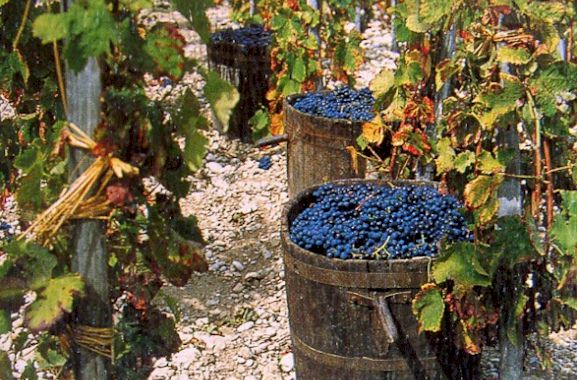
Very hot and dry weather conditions in Chianti mean an exceptional vintage is predicted for Chianti Classico 2015, according to the experts. This year will also be the second earliest vendemmia (grape harvest) since World War II, 2003, the year of a major drought, being the earlier harvest. Both quality and quantity of Chianti wine should be excellent this year, with estimated production rising at least 5% over last year, for an projected total of about 44 million hectoliters.

exceptional vintage for Chianti Classico 2015

The additional production should keep prices stable so watch for the Gallo Nero label of Chianti Classico 2015 when the wine reaches the shops in spring next year. The Riserva will appear on the market starting from late 2016.

As with all Chianti Classico wine, cellar your bottles for 5 to 6 years, not more. Some can be drunk even sooner, but they should not be kept for much longer than that period. In contrast to claret, for example, Chianti Classico is best consumed quite young.

Tuscan Extra Virgin Olive Oil harvest 2015


Tuscan olive oil

Based on my olive trees and those I have seen in central Chianti, this year's olive oil production in Tuscany will be infinitely better than the disastrous harvest of 2014. It looks as if it was cold enough during winter to inhibit the life cycle the Bactrocera oleae, the fruit fly that lays its eggs in the olives whence, eventually, the larvae eat their way out, destroying the fruit. Four days of frost kill the eggs. Last winter was the warmest on record in Tuscany and was followed by warm, humid conditions, ideal for fruit flies.

Until now the bacterium that is wiping out olive trees in southern Italy has not made an appearance in Tuscany. Xylella fastidiosa is a bacterium carried by aphids and has spread quickly through the olive trees of Apulia. This is particularly tragic because some of the olive trees there, in contrast to those in Tuscany, are up to a thousand years old. We are praying that the disease is brought under control before it spreads to Tuscany.

Tuscan wine tours and winery vacation rentals.

Tuscany Toscana
Don't forget to visit my Tuscany
Travel Guide!

Up-to-date news on what to see and where to stay in Chianti and all of Tuscany.

Tuscany Travel Guide


vacation accommodations in Tuscany

Author: Anna Maria Baldini

All content copyright © ammonet Infotech website promotion 2015. All rights reserved.

Sunday, 7 June 2015

Where can I find the best pizza in Tuscany?

Well, I obviously can't answer the question, "Where can I find the best pizza in Tuscany?". For one thing neither I nor anyone else has eaten at every pizza restaurant in Tuscany and, of course, tastes vary. However, having said that, what I can tell you is where to enjoy truly excellent thin crust pizza in Tuscany. I prefer the thin crust variety of pizza because it's lighter, easier on the digestion and the taste of the dough doesn't distract attention from the tastes of the toppings.

thin crust pizza in Tuscany
A delicious thin crust pizza
In Greve in Chianti, Ristorante Pizzeria La Cantina, located away from Piazza Matteotti on the small Piazza Trento where the buses from Florence stop, serves a range of beautifully presented Tuscan dishes AND the best thin crust pizza I have tasted anywhere in Chianti. You have a choice of sitting outside on the piazza or inside in the "cantina" which used to be a coal store for the steam trams that used to run from Greve to Florence. The restaurant was the bar of the tram station which occupied Piazza Trento. During summer, I always sit outside in enclosed area on the edge of the piazza.

Ristorante Pizzeria La Cantina in Greve in Chianti, Tuscany
Interior of Ristorante Pizzeria La Cantina in Greve in Chianti
It's usually Alessandro taking the orders (using an app on his cellphone) with Lorena in charge of the kitchen. There's a good range of pizza toppings and a very good wine cellar. And don't forget to try some of the other dishes - classic Tuscan with individual flare.

Outdoor dining at Ristorante Pizzeria La Cantina in Greve in Chianti
Here's Alessandro taking an order


Happy customers at Ristorante Pizzeria La Cantina in Tuscany
Happy customers at Ristorante Pizzeria La Cantina

La Cantina house wine - an excellent Chianti Classico

Alessandro's family opened "La Cantina" in 1980 in the old tram bar and later extended it by converting the coal store into a commodious dining room. La Cantina is open for both lunch and dinner.

More about Ristorante Pizzeria La Cantina in Greve in Chianti.


Tuscany Toscana
Don't forget to visit my Tuscany
Travel Guide!

Up-to-date news on what to see and where to stay in Chianti and all of Tuscany.

Tuscany Travel Guide


vacation accommodations in Tuscany

Author: Anna Maria Baldini

All content copyright © ammonet Infotech website promotion 2015 - 2026. All rights reserved.

Thursday, 24 April 2014

The upper floor of the Mercato Centrale in Florence has re-opened today

Great news! The upper floor of the Mercato Centrale in Florence has re-opened today. Readers of my posts will know I'm a great enthusiast for the Mercato Centrale in Florence, both for its wonderful Art Deco cast iron architecture (called "Liberty" style in Italian after the Liberty shop in London) and for its amazing contents - edibles of every kind displayed with Italian flair. The upper floor has been closed over a long period for restoration and now we can see that they have not only restored it but created a really pleasing public area, high and light, for sales of food products to take away (cheeses feature prominently) but also to stop for something to eat or drink in a great ambiance.

Upper floor of the Mercato Centrale of Florence re-opens
Upper floor of the Mercato Centrale in Florence re-opens
So this is an additional reason not to miss this architectural gem right in the middle of Florence. And not just for the architecture. The Mercato Centrale is a working market - real Florentines flock here to buy their supplies. Some are restauranteurs and others are Florentine housewives who like the huge choice, freshness and prices of the fruit,vegetables, meat, salumi and sea food on offer.

The Mercato opens Monday through Saturday early in the morning (7 am) and closes at 2 pm. By 1.30 pm many of the stalls are already closed or closing. I'll report back if these hours will be extended with the availability of the newly restored space upstairs.

https://www.facebook.com/florencefirenzeitalyitalia

Tuscany Toscana
Don't forget to visit my Tuscany
Travel Guide!

Up-to-date news on what to see and where to stay in Chianti and all of Tuscany.

Tuscany Travel Guide

Author: Anna Maria Baldini

All content copyright © ammonet Italian Web Site Promotion 2014. All rights reserved.

Wednesday, 12 June 2013

Famous Tuscan butchers Falorni in Greve in Chianti and Cecchini in Panzano in Chianti

In ancient times, meaning before WWII, most of the contadini in Tuscany ate meat only once a week, mostly in the form of a selection of salumi. For the remainder of the week they ate ribollita in winter and panzanella in summer - both dishes being based on Tuscan bread and Tuscan olive oil with the addition of whatever fresh vegetables were available. In fact, that's how it's been for the past thousand years, at the very least. Nowadays, the meat-based dishes of Tuscan cuisine are much more prominent and famous, and as a consequence so are some wonderful Tuscan butchers shops (macellerie). In this post, I will say something about just two among many, the famous Tuscan butchers Falorni in Greve in Chianti and Cecchini in Panzano in Chianti.

Antica Macelleria Falorni Greve in Chianti
Antica Macelleria Falorni in Greve in Chianti
Antica Macelleria Falorni, located on Piazza Matteotti of Greve in Chianti, claims to be the oldest butchers shop (macelleria) in Italy. The shop was founded by Gio Batta in 1729. Today Antica Macelleria Falorni is run by the eighth generation, brothers Lorenzo and Stefano Bencistà, related by marriage to the founding family. Along with fresh meat, Falorni sells a fine range of salami, prosciutto and other prepared meats and in fact the company has a large production that is sold throughout Italy and abroad. When you visit Greve in Chianti, be sure to drop in to look at the amazing display of Tuscan meat specialities on show at Macelleria Falorni, taste some samples if they're on offer and, of course, buy some great food!

Dario Cecchini in his butchers shop in Panzano in Chianti

Macellaria Cecchini, located ten minutes drive away in Panzano in Chianti, is entirely different in style from Macellaria Falorini. Macellaria Cecchini is, simply, Dario Cecchini, the mad butcher of Panzano. Cecchini specialises in prepared meats, one could almost say, anything other than salumi. And in contrast to the export-oriented business of Falorni, Cecchini has entered the restaurant trade in a very original way, particularly in his Panzano restaurant Solociccia. Dario Cecchini very often serves in his shop and welcomes visitors, even those just coming to look. While the display of meat products is amazing, you're basically coming to see Dario perform - and of course to buy some excellent eats.

Dario Cecchini is famous as a promoter of bistecca alla fiorentina and both of these butchers shops sell excellent cuts of beef suitable for grilling.

More about Piazza Matteotti in Greve in Chianti.

More about Macellaria Cecchini in Panzano in Chianti.

More about bistecca alla fiorentina.

More about Tuscan culinary specialities.

More about places to stay in Chianti.

Tuscany Toscana
Don't forget to visit Elena Spolaor's
Travel Guide!

Up-to-date news on what to see and where to stay in Chianti and all of Tuscany & Umbria.

Chianti Travel Guide

Author: Anna Maria Baldini

All content copyright © ammonet Web Site Promotion 2013 - 2022. All rights reserved.

Sunday, 3 March 2013

Really excellent pizza in Florence

When my friends staying here in the Chianti countryside decide to head in to Florence for a day of sightseeing, they often ask me where they can get really excellent pizza in Florence. Although the native territory of pizza is in the south of Italy around Naples, this wonderful dish has long been made all over Italy and, if you look hard enough, you can find very good pizza in Florence.

Where to get a really excellent pizza in Florence
Pizza - one of the great dishes of the world
My recommendation for the best pizza in Florence is Il Pizzaiuolo (located at Via de' Macci 113/r, near the Sant'Ambrogio market - closed Sunday). Be warned, this place is usually very busy and they do have a bad habit of pushing the customers through. Either arrive early or make a reservation and show up on the dot. The pizza is thick in style and they have two pages of variants in the menu.

best pizza in Florence
Wood-fired pizza oven - the only way to go.

The follower up as best pizza place in Florence is Trattoria Baldovino (Via San Giuseppe 22/r, adjacent to Santa Croce). This place was opened and developed by David Gardner, owner of Villa Bordoni boutique hotel, and was his first great success in Florence.The newspapers were full of descriptions of the Scot who came to Florence to show the locals how to cook Tuscan food. He has since sold it but it remains a great place to eat.

If you're staying anywhere near Greve in Chianti, there is a fabulous pizzeria in Piazza Trento, near where the bus from Florence stops. This is Ristorante Pizzeria La Cantina which serves wonderful thin crust pizza as well as beautifully-presented traditional Tuscan dishes. There's outdoor seating as well as the large interior dining room. Open for both lunch and dinner, great food, prices extremely reasonable.

Recommended vacation accommodation in Chianti towns, villages and countryside.


Author: Anna Maria Baldini

All content copyright © ammonet Web Site Promotion 2012 - 2015. All rights reserved.

Monday, 10 December 2012

The Mercato Centrale in Florence is not the same as the San Lorenzo Market!

Today we have a post of interest to visitors to Florence. I want to demonstrate emphatically that the Mercato Centrale in Florence is not the same as the San Lorenzo Market! They may be right next to one another, but that's all they have in common.

Here's the take-home message right at the start. The Mercato Centrale is a marvellous meat, seafood, charcuterie, fruit and vegetable market patronised by Florentines. It's housed in a beautiful 1874 Art Deco iron and glass structure and is one of the most interesting and colourful markets in Europe. In contrast, the outdoor San Lorenzo market is a crowded cluster of booths and barrows populated by aggressive touts selling overpriced tourist tat, mainly of Chinese and Indian origin.

Let's go first at the Mercato Centrale of Firenze. Here's how it looks, outside and in.

The Mercato Centrale in Florence is not the same as the San Lorenzo Market
The exterior of the Mercato Centrale in Florence.

Mercato Centrale Firenze
Just one of dozens of produce stands in the Mercato Centrale.
The Mercato Centrale is not only a wonderful place to buy your fresh produce, meat, salumi, fish, cheese, olive oil, sweets, herbs and spices, but it is also so colourful and full of life with great opportunities for some very creative photoshoots. You can also eat well at the little restaurants and food stalls inside the Mercato where you will find Tuscan home cooking, including (BUT NOT LIMITED TO!) favorite Florentine dishes such as lampredotto (tripe). (Avoid Gastronomia Perini's meat and cheese counter. They have a reputation for cheating tourists on the grand scale.)

The Mercato opens Monday through Saturday early in the morning (7 am) and closes at 2 pm. By 1.30 pm many of the stalls are already closed or closing. The Mercato Centrale is an easy stroll from the Duomo.

Mercato San Lorenzo a Firenze
Tourist souvenirs on sale at the Mercato San Lorenzo

San Lorenzo market in Florence

Almost outside the door of the Mercato Centrale is the open air Mercato San Lorenzo. Many years ago, San Lorenzo was a local market that specialised in high quality, Italian-made leather articles ranging from hand bags through jackets to leather coats. The market has long since changed into an area catering solely to tourists and manned mostly by non-Italians. The goods are largely of Chinese and Indian origin, and, despite a reputation for allowing haggling, the prices are very uniform for the same item. Those labelled 'Made in Italy', when not outright fakes, are made in Chinese sweatshops in Prato. In addition to the endless hats, T shirts and scarves, there are leather goods (and plenty of vinyl goods masquerading as leather goods) but generally of very poor quality. The mismatched pieces of leather fade badly and fade at different rates, and often rip under the slightest tension. The vendors are extremely aggressive and the place is a haven for pickpockets. The shops associated with the stalls and to which customers are often lead are not better in the quality that they offer but ARE better adapted to the hard sell. In summary, unless you want to pick up a few inexpensive gifts for friends back home, there is no good reason to come to San Lorenzo Market.

Note: a classic scam practised by some vendors at this market works as follows.  You order a couple of high quality leather jackets in a size currently out of stock, to be send to you by post. What arrives is a rubbishy item nothing like what you ordered, but your credit card is charged for two expensive jackets. You contest this with your card company but the vendor has a shipping receipt. The card company says there's nothing they can do.


Today's top links: For everything you need to know about what to do and where to stay in Tuscany: The Chianti Travel Guide and The Greve in Chianti Tuscany Blog.


All content copyright © ammonet Web Site Promotion 2012 - 2019. All rights reserved.