Showing posts with label villa. Show all posts

Wednesday, 6 May 2026

Open day of the villas and gardens in Florence 24 May 2026

Those of you who are enthusiasts for the villas and gardens of Tuscany have a great opportunity on Sunday 24 May 2026 to visit a great many of the villas and gardens that are usually closed to the public. Entrance is free. I can't emphasise enough what a wonderful opportunity this is to see some splendid architecture and historical gardens.

Palazzo Corsini and its garden in Florence

Open gardens in the Florence historical centre – opening hours 10 am to 1 pm – 3 pm to 7 pm. Sunday 24 May 2026. 

Giardino Torrigiani in Florence

San Francesco di Paola Garden, piazza San Francesco di Paola 3

Giardino Torrigiani, via dei Serragli 144

Palazzo Ricasoli Firidolfi (no reservation required), via Maggio 7

Palazzo Antinori di Brindisi Aldobrandini (no reservation required), via dei Serragli 9

Palazzo Frescobaldi (no reservation required), via Santo Spirito 11

Antica Torre Terrace (Fiesole Music School concert, 11 pm), via Tornabuoni 1

Palazzo Bartolini Salimbeni (no reservation required), piazza Santa Trinita 1

Palazzo Corsini (no reservation required), lungarno Corsini 10

Palazzo Rucellai (no reservation required), via della Vigna Nuova 18

Palazzo Antinori, piazza Antinori 3

Palazzo Gondi, via dei Gondi 2 and piazza San Firenze 1

Antellesi Garden (no reservation required), piazza Santa Croce 21

Fondazione Mello – Le Colonne Art Studio, borgo Pinti 24

Palazzo Leopardi – Marcello Tommasi Art Studio, via della Pergola 57

Palazzo Ximenes Panciatichi (Fiesole Music School concert, 3 pm), Borgo Pinti 68

Palazzo Grifoni Budini Gattai (Fiesole Music School concert, 4 pm), piazza Santissima Annunziata 1

Palazzo Niccolini (Fiesole Music School concert, 12pm, no reservation required), via dei Servi 15

Palazzo Pucci, via de’ Pucci 4

Palazzo Ginori (Fiesole Music School concert, 5 pm), via de’ Ginori 11

Read my post on the Florence open day gardens I visited in 2015. 

Palazzo Antinori in Florence


Tuscany Toscana
Don't forget to visit my Tuscany
Travel Guide!

Up-to-date news on what to see and where to stay in Chianti and all of Tuscany.

Tuscany Travel Guide


vacation accommodations in Tuscany

Author: Anna Maria Baldini

All content copyright © ammonet Infotech website promotion 2016 - 2026. All rights reserved.

Wednesday, 18 May 2022

Open gardens day in Florence: Cortili e Giardini Aperti a Firenze

As my faithful readers will remember, I am an enthusiast for the formal gardens of Tuscany, especially those of the larger villas of Tuscany. I therefore always look forward to Open gardens day in Florence (Cortili e Giardini Aperti a Firenze) which in 2022, takes place on 22 May, when the private gardens of Florence are open to the public - see the list here. In 2018, I took the opportunity to visit some gardens in the Oltrarno which I either hadn't seen before at all or only a long time ago.

The one I want to describe in some detail is the Giardino San Francesco di Paola which extends upwards and away from the former home of Harry Brewster, "the last of the cosmopolites of Florence". Brewster, a descendent of William Brewster of the Mayflower, was also the grandson, on his mother's side, of the German sculptor Adolf von Hildebrandt, whose studio occupied part of the former Minimite convent of San Francesco di Paola. The convent is located at the foot of Bellosguardo, the beautiful hill that dominates the Oltrarno. It was an evocative experience for me to walk up Via Villani to the circular Piazza San Francesco di Paola. Although there are 19 C and modern buildings on two sides of the piazza, the old church and the wall and gate of the convent are still there, just as described by Brewster. The main structure was long ago divided up into apartments and, alas, the building is looking much the worse for wear. Indeed, so are some of the remaining Hildebrandt sculptures standing in the loggia at the back of the villa.

Villa of San Francesco di Paola
The loggia of the Villa of San Francesco di Paola - much in need of some restoration

However, the garden is beautifully kept up, as is the hay shed (fienile) which Brewster converted into a neat, strangely English-looking, cottage covered in roses and surrounded by a small lawn, where he himself lived in frugal simplicity writing his books. One continues up a series of irregular steps to Brewster's beloved belvedere from which there is a beautiful view of Florence, which because of its lower altitude, is almost more beautiful than the vista from the top of Bellosguardo.

Giardino San Francesco di Paola
View of Florence from the belvedere in the Giardino San Francesco di Paola

Next I walked to entrance of the Giardini Torrigiani not far from the Pitti palace. I have often passed the fine iron gates of these gardens - little did I know that there are 17 acres of gardens hidden behind the walls in the centre of the Oltrarno. In fact, the Torrigiani gardens are the largest private gardens within city limits in all Europe.

Torrigiani gardens in Florence, Italy
A view of a small part of the Torrigiani Gardens, In Florence

The Torrigiani gardens were originally planted by the founder of the Italian Botanical Society, the oldest such society, and the garden still has an uncommonly wide variety of trees, especially exotic species, in keeping with its 19 C “English Landscape” style. The gardens were designed at the height of the Romantic movement in the early 19 C, forming an idyllic oasis of green around the original 16 C villa. The garden hosts rare tree species, wide English-style lawns, herb and vegetables gardens, sculpted lions, a beautifully restored greenhouse and remains of the city walls built under Cosimo I in 1544. The layout of the garden is also profoundly symbolic and I strongly advise visiting it with a good Tuscan garden guide book in hand.

Giardino Torrigiani a Firenze
The astronomical tower in the Torrigiani gardens

Last but not least, I visited that exquisite jewel of a garden, the Giardino Corsi Annalena, nearby on via Romana. This garden is located on land formerly owned by the monastery of San Vincenzo which was founded in around 1441 by Countess Anna Elena (Annalena) Malatesta. During the long struggle for supremacy between Florence and Sienna, the area was dominated by the fortifications created by Cosimo I de’ Medici, including an underground passage that until this day connects the Boboli, Corsi and Torrigiani gardens. Following the destruction of the fortifications in 1571, the area was left abandoned for many years. In 1790, the Marquis Tommaso Corsi purchased the land, then known as the "Moors’ Garden", and the architect Giuseppe Manetti designed what can be considered the first English garden in Florence. It was completed during the years 1801 to 1810. If you have the chance to visit this beautiful garden, please don't miss it.

Giardino Corsi Annalena in Florence
The Giardino Corsi Annalena in Florence


Tuscany Toscana
Don't forget to visit my Tuscany
Travel Guide!

Up-to-date news on what to see and where to stay in Chianti and all of Tuscany.

Tuscany Travel Guide


vacation accommodations in Tuscany

Author: Anna Maria Baldini

All content copyright © ammonet Infotech website promotion 2015 - 2022. All rights reserved.

Saturday, 7 May 2022

Palazzo Chigi Zondadari in Sienna opens to the public

Everyone visiting the main piazza of Sienna, especially during the Palio, will have seen, although perhaps not particularly noticed, the Palazzo Chigi Zondadari which is located on the higher side of the Piazza del Campo and provides the perfect view of the Palio. However, very few know that the interior of this palazzo is spectacularly decorated and furnished.

From 8 May 2022, the Palazzo Chigi Zondadari in Sienna opens to the public on a permanent basis.

Palazzo Chigi Zondadari in Siena

Palazzo Chigi Zondadari

The Palazzo was built for Cardinal Antonfelice Zondadari (1655 - 1737) and his brother Bonaventura (1652 - 1719), first Marquis Chigi Zondadari and founder of this aristocratic dynasty. The palazzo has been the Siennese residence of the family since 1724 and was the last palazzo to be constructed in the Piazza del Campo.

The Palazzo Chigi Zondadari is a typical baroque-neoclassical structure designed by Antonio Valeri (1648 - 1736), the last pupil of Gian Lorenzo Bernini, who was brought in from Rome to modernise and expand the pre-existing mediaeval buildings that were were purchased by the Chigi at end of the 17 C.

Bust of Pope Alexander VII by Bernini
$
Bust of Pope Alexander VII by Bernini

The palazzo is a linear structure, with five rows of windows, an internal courtyard and a splendid main staircase. The main floor is the most interesting. The halls and galleries have frescoed ceilings, house a collection works of art, archaeological finds, paintings and sculptures, among them a fine bust of Pope Alexander VII by Gian Lorenzo Bernini, and three rooms have their walls decorated in spectacular Venetian "corami" from the 1780s.

Salotto Rosso of the Palazzo Chigi Zondadari

Salotto Rosso of the Palazzo Chigi Zondadari

Among the renowned artists who worked on the palace were Placido Costanzi, a pupil of Francesco Trevisani, one of the most important artists who was a followers of Carlo Maratta and of Benedetto Luti. Cardinal Antonfelice Zondadari entrusted the execution of some frescoes depecting episodes from the life of Pope Alexander VII and Cardinal Zondadari to Placido Costanzi. Another painter who worked on the noble floor was Marco Benefial, a pupil of the Carraccesco Bonaventura Lamberti. Francesco Nenci who completed the decoration of the rooms during the 19 C.

Tuscany Toscana
Don't forget to visit my Tuscany
Travel Guide!

Up-to-date news on what to see and where to stay in Chianti and all of Tuscany.

Tuscany Travel Guide

Author: Anna Maria Baldini

All content copyright © ammonet Italian Web Site Promotion 2022. All rights reserved.

Sunday, 12 January 2020

Florentine villas and gardens: American and English expatriates in Tuscany

Villa Gamberaia , located i on the outskirts of Settignano above Florence was a favorite destination among the Florentine villas and gardens for American and English expatriates in Tuscany during the later 19th and early 20th centuries.

Florentine villas and gardens: American and English expatriots in Tuscany
The parterre of Villa Gamberaia

Villa Gamberaia, celebrated for its unique gardens and splendid views over the city of Florence and the Arno Valley, has long inspired American and British landscape designers, from Charles Platt and Cecil Pinsent to Ellen Biddle Shipman. In the early 1900s, it was the favorite meeting place of Bernard and Mary Berenson, Janet Ross, Vernon Lee and Arthur Acton, who gathered for tea, dinners on the terrace and talks on art and literature with their hostess, the Romanian princess Jeanne Ghyka and her American companion, artist Florence Blood, two very talented women who created the magnificent parterre d’eau.


Tuscany Toscana
Don't forget to visit my Tuscany
Travel Guide!

Up-to-date news on what to see and where to stay in Chianti and all of Tuscany.

Tuscany Travel Guide


vacation accommodations in Tuscany

Author: Anna Maria Baldini

All content copyright © ammonet Infotech website promotion 2023. All rights reserved.

Saturday, 13 April 2019

Villas of Florence and the 19th century photographer Longworth Powers

When I have a free hour or two - an increasingly rare event - I like to wander the byways of Florence in search of less known corners of beauty and history. Viale Poggio Imperiale, starting at Porta Romana and running uphill all the way to Arcetri is one productive hunting ground, lined as it is with beautiful villas, each with a story to tell. The avenue leads to the Medicean Villa del Poggio Imperiale which belonged to the Medici Grand Ducal family from 1565 until 1738, but which reached its architectural peak under the Habsburg Lorraines, the successors to the Ducal Medici as rulers of Florence and owners of the villa. It later became, and still is, an exclusive girls' boarding school, the Istituto Statale della Ss. Annunziata, but the magnificent imperial rooms are open to the public one day a week.

Villa Poggio Imperiale in Florence, Italy
One of the imperial rooms of Villa Poggio Imperiale in Florence, Italy

A more modest but in some ways much more attractive villa on Poggio Imperiale belonged to Longworth Powers, a sculptor and photographer. Longworth was the son of Hiram Powers (1805 - 1873) who was an extremely successful American neoclassical sculptor, Swedenborgian and spiritualist, who moved to Florence in 1837 and settled on the Via Fornace, where he had access to good supplies of marble and to traditions of stone-cutting and bronze casting. He remained in Florence until his death, turning out marble busts and statues that were often reproduced in large numbers by his workmen and which sometimes fetched thousands of dollars. His studio was a fashionable stop on any American's grand tour. One of Longworth's brothers, Preston Powers, followed in his father's footsteps, first in America and then in Florence, but without success, and he died penniless in Florence in 1931.


The Longworth family in Florence
The Longworth family in Florence - Hiram top centre.

Longworth Powers was eventually more successful than his brother Preston. He was the eldest son of Hiram and in his early life he struggled to establish a career, failing to persevere at any task for long, a fact that continually frustrated his successful father. Longworth enrolled at the United States Military Academy at West Point, where his family hoped that the education and discipline would would have beneficial effects, but he was "asked to leave" after only one semester. He then attended Rensselaer Polytechnic Institute in upstate New York, but failed to stay long enough to earn a degree. His father thought Longworth might do better in Florence and so put him to work as bookkeeper in his studio while teaching him the basics of sculpture. Longworth created portrait busts and idealised pieces in a softer more romantic neoclassical style than his father, but his interest soon waned, and Hiram sent him back to America.

Flora a sculpture by Longworth Powers
Flora (1880) is clearly indebted to Hiram Powers's allegorical busts but in a more romantic style

By 1860, Longworth was back in Florence and began working as a photographer. He was a great success, creating portraits of the prominent men and women in the city, as well as selling photographs of Florentine landmarks and works of art. He created a great many plaster busts of the famous and not so famous visitors and residents in Florence and bought himself a villino on Viale Poggio Imperiale, with an annex which he turned into a photographic studio.

The villa of Longworth Powers on Viale Poggio Imperiale
The villa and studio of Longworth Powers on Viale Poggio Imperiale


The Powers Villa in Florence - living room
The living room of the Powers villa in Florence - high Victorian!
Photographs and plaster busts by Longworth Powers still come up on the market. His photographic portfolio in preserved in the Gabinetto Vieusseux. Alas, a search of the Florence white pages suggests that the Powers family is extinct here.

Tuscany Toscana
Don't forget to visit my Tuscany
Travel Guide!

Up-to-date news on what to see and where to stay in Chianti and all of Tuscany.

Tuscany Travel Guide

Author: Anna Maria Baldini

All content copyright © ammonet Italian Web Site Promotion 2019 - 2020. All rights reserved.

Friday, 10 April 2015

Edith Wharton in Italy - villas and gardens of Tuscany

The novels and short stories of Edith Wharton are still on the reading lists of the more progressive women's colleges in the United States, and some of them are even read from time to time. However, my interest in Mrs Wharton is based on her life-long passion for garden design on the grand scale and on her excellent book, "Italian Villas and their Gardens" which was published in 1904 and is scarce in its original edition. As a substitute or additional read, I can recommend Edith Wharton's Italian Gardens by Vivian Russell, who visited and photographed the surviving gardens described by Mrs Wharton.

Edith Wharton
Edith Wharton as an earnest young woman

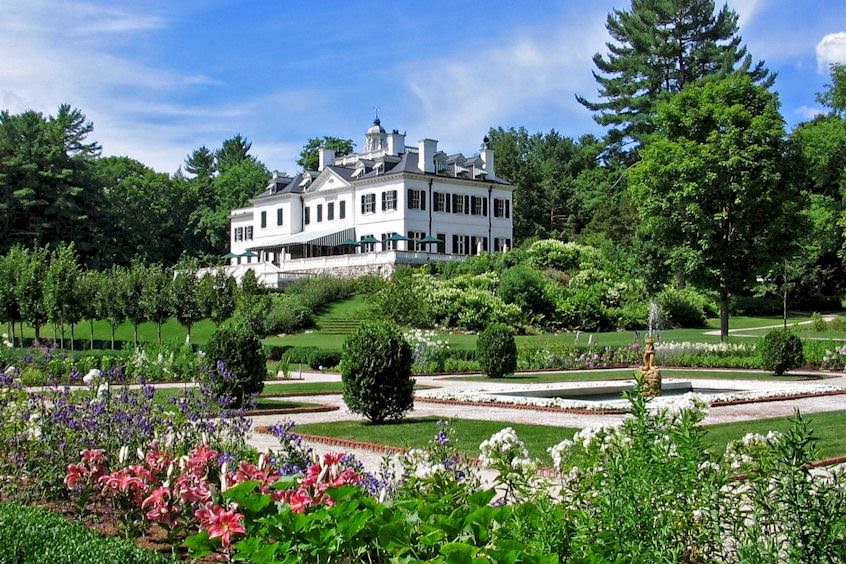
Although Mrs Wharton (1862-1937) is often tarted up by English Literature departments as something of a rebel, her birth in 1862 into the richest of the rich class of "Old New York" made possible not only her fictional writings, with their insider's view of America's privileged classes, but, much more importantly to me, made it natural that she would travel extensively in Europe and allowed her to create a wonderful house and garden, "The Mount", near Lenox, Massachusetts, and to recreate a second one, "Le Pavilion Colombe", at Saint-Brice-sous-Forêt. These houses and estates were created according to the principles elaborated in her book The Decoration of Houses (1897), co-authored by Ogden Codman, and drew heavily upon her observations of the villas and gardens of Tuscany, especially of the Medicean villas. She wrote in Italian Villas and their Gardens that gardens should be divided into rooms and planned in concert with the house and the natural landscape, a Classical concept revived in Renaissance times.

"The Mount", Edith Wharton's house and garden at Lenox, Mass.

Edith Wharton's parents were George Frederic Jones and Lucretia Stevens Rhinelander, and the saying "keeping up with the Jones" is said to refer to her family. After the end of the Civil War, her family traveled extensively in Europe. From 1866 to 1872, the Jones family visited France, Italy, Germany and Spain. During these travels, Edith became fluent in French, German and Italian. When at home in the United States, the Joneses spent their winters in their New York mansion and their summers in their Newport "cottage". In 1885, at age 23, Edith Jones married Edward (Teddy) Robbins Wharton, who was 12 years her senior. Wharton was from a well-established Boston family, and was a sportsman and a gentleman of the same social class, and shared her love of travel. Unfortunately, the marriage began to deteriorate, in part due to Teddy Wharton's severe depression, and Mrs Wharton eventually moved permanently to France. During World War I, she remained in her Paris apartment and was an ardent and effective supporter of the French war effort.
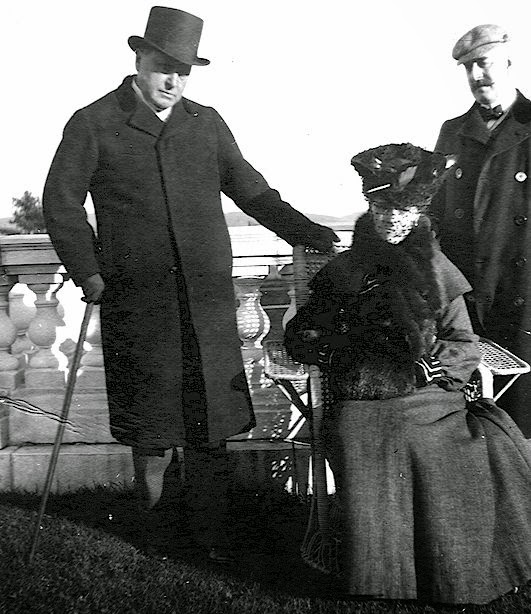
Henry James, Edith Wharton, and Howard Sturgis

Edith Wharton was an indefatigable motorist and was driven throughout Europe by her chauffeur Charles Cook in amazing, usually huge, cars that were often one of a kind. Her tours resulted in some excellent travel writing, including her book Italian Backgrounds and of course, Italian Villas and their Gardens. One of her favorite Tuscan gardens is also a favorite of mine, namely Villa Gamberaia, located on the outskirts of the village of Settignano near Florence. Bernard Berenson was another Florentine friend of Mrs Wharton and his Villa I Tatti is about a mile away from Villa Gamberaia. Villa I Tatti belongs to Harvard University and is not easily visited, but Villa Gamberaia is still in private hands and one can not only visit the gardens but it is possible to stay in one of the guest houses within the garden.

The garden of Villa Gamberaia viewed from the villa

Edith Wharton passed away on 11 August, 1937 at Le Pavillon Colombe, her 18 C house on Rue de Montmorency in Saint-Brice-sous-Forêt. She was comforted by her friend Mrs Royall Tyler, a native of Florence, born Elisina Palamidessi de Castelvecchio (sometimes styled "Contessa" - including by herself - but, although her mother held that title, it was not hereditary and she had no right to it). She was the wife of a famous Bostonian historian educated partly at Harrow and Oxford, with extensive European connections. My friend Paul Chipchase knew their son, William Royall Tyler, himself an eminent American abroad, and passed on to me many interesting reminiscences of Mrs Wharton.

I can strongly recommend the excellently written and beautifully illustrated recent biography of Edith Wharton by Eleanor Dwight. Everything you need to know is here along with masses of rare photographs.

R.W.B. Lewis wrote an earlier and highly regarded biography of Edith Wharton which I am about to read. I'll report back on that later. There is a further recent biography of Edith Wharton by Hermione Lee. This latter runs to 850 pages, including masses of analysis of Mrs Wharton's fiction. I doubt that I'll read it.

Villa Medici at Fiesole

Among the villa gardens near Florence that Mrs Wharton described in her book are Villa Petraia, Villa Demidoff (Pratolino), Villa Medici at Fiesole, Villa Corsini near Impruneta, Villa Gamberaia and Villa Capponi at Arcetri.

More about Tuscan villas.


Tuscany Toscana
Don't forget to visit my Tuscany
Travel Guide!

Up-to-date news on what to see and where to stay in Chianti and all of Tuscany.

Tuscany Travel Guide


vacation accommodations in Tuscany

Author: Anna Maria Baldini

All content copyright © ammonet Infotech website promotion 2015 - 2020. All rights reserved.

Wednesday, 8 April 2015

Things to do in Pienza and the Val d'Orcia

Pienza, the pearl of the Val d'Orcia, is one of my favorite towns and from 1st to 10th May, Pienza will look more beautiful than ever. During that period there will be even more things to do in Pienza and the Val d'Orcia with this year's "Pienza e i fiori", the flower and plant festival with the theme: "Cloisters and gardens in bloom". The cloisters and courtyards of the best of the Renaissance palaces (Palazzo Piccolomini, Palazzo Borgia and Ammannati) and some of the piazzas of Pienza will be decorated in the style of a great renaissance festival, festooned in laurel wreaths and bouquets of fruit (inspired by Renaissance paintings), box shrubs, climbing roses and many other flowers in the most beautiful areas of the town.

"Pienza e i fiori", the flower and plant festival in Pienza

The flower market, the final event, will take place in the streets of the old town and the gardens in Piazza Dante Alighieri, on Saturday and Sunday 9th & 10th May 2015. You can buy both in plants and flowers of all kinds, including everything you need for gardening and for cultivation. But for visitors, the pleasure is strolling through the streets and squares.

Courtyard of the Palazzo Piccolomini decorated in classic garden stlle.

In addition, there will be a shuttle bus providing visits to the historic gardens of the Val d'Orcia including the wonderful architecture of the gardens of Palazzo Piccolomini, the Leonini Garden in San Quirico d'Orcia, the famous garden of Villa La Foce, the life's work of Iris Origo, and finally the elegant garden of Palazzo Massaini where, at the conclusion of the visit, you can enjoy a free taste of the food and wine produced on the farm owned by Bottega Verde.

For garden nuts (and all other lovers of beauty) who will be staying in or visiting Florence, don't forget to pay a visit to the exquisite gardens of Villa Gamberaia nearby in Settignano.


More about The classic gardens of Tuscany.

More about the town of Pienza in the Val d'Orcia.

More about Visiting Pienza in the Val d'Orcia.

More about Gardens of the Tuscan villas.


Tuscany Toscana
Don't forget to visit Elena Spolaor's
Travel Guide!

Up-to-date news on what to see and where to stay in Chianti and all of Tuscany & Umbria.

Chianti Travel Guide


vacation accommodations in Tuscany

Author: Anna Maria Baldini

All content copyright © ammonet Infotech website promotion 2015 - 2023. All rights reserved.

Thursday, 18 December 2014

Vacation accommodations in Tuscany

Now is the time to consider reserving your vacation accommodations in Tuscany. As soon as Christmas and New Year are over, everyone will be starting to plan a vacation for the new year. If you'll be coming to central Italy, be sure to consider the option of staying for at least part of the time in Tuscan vacation accommodations in the country. There a numerous agriturismi, as these rural holiday homes are called, within easy reach of the bigger art cities by car or bus, and their prices can be extremely reasonable - as little as 65 euros per night for an apartment sleeping 2-3 people - that's with a fully equipped kitchen and often access to a pool. Add to this tranquility, panoramic views and, during summer, significantly cooler temperatures, and a stay in the country becomes a very attractive option.

vacation accommodations in Tuscany
A beautiful Tuscan agriturismo for your vacation accommodations in Tuscany

One of the most popular areas to stay in is the Chianti area between Florence and Sienna, with numerous agriturismi being located in the hills around Greve in Chianti. Florence is easily accessible by bus although a car makes it easier to visit Siena. The entire Chianti area is packed with history in the form of castles, fortified mediaeval villages, abbeys, monasteries, Romanesque churches and tower houses. And of course Chianti Classico wine is available directly from the wineries throughout the area.

To obtain the best rates, OWNER DIRECT reservations are recommended. You can ask the owner questions and at the same time avoid middleman fees any dodgy rental agencies that might be out there on the internet.

Click this link for accommodation in Chianti and elsewhere in Tuscany.

For information on almost every town and village in Tuscany and Umbria: www.bella-toscana.com

For information on the Chianti Classico area and Tuscany in general: www.chianti.info


All content copyright © ammonet Infotech 2015 - 2016. All rights reserved.

Thursday, 26 June 2014

"Under Petraia with some wanderings" - the second volume of Georgina Grahame's memoirs

Attentive readers will no doubt remember my post regarding the splendid and unjustly neglected volume "In a Tuscan Garden" by an anonymous author since identified as Mrs. Georgina Grahame, an aunt of Kenneth Grahame of "The Wind in the Willows" fame. I closed that post with the hope that I would be able to obtain a copy of the very scarce second volume of her memoirs, "Under Petraia", not a trace of which could be found in any of the big multidealer rare books websites. Well, less than a year later, my very good friend Paul Chipchase, scholar and gentleman, located a copy in Australia and nobly presented it to me.

This second volume was published in 1909, eight years before Mrs. Grahame's death in Florence in 1917 at the age of 79. It begins with a description of her successful efforts to find a new home when the lease on her house, Il Villino Landau, was terminated upon the death of the owner, Baron Landau, in 1903. The new house was located in an area to this day not especially popular with tourists, whether Italian or foreign, namely Castello, in the hills of Quarto, north west of Florence and on the boundary of Sesto Fiorentino (not surprisingly, since Quarto and Sesto refer to the 4th and 6th Roman milestones from Florence. Quinto lies between them and is home to Santo Croce a Quinto, the second most hideous church in Florence, the winner being Michelucci's brutalist Motorway Church). Quarto's main claim to fame is as the location of the Villa Medicea di Castello and, not far away, the Villa La Petraia, another Medicean villa and once the favorite residence of King Victor Emmanuel II.

The giardino all'italiana of Villa di Castello, Florence

The giardino all'italiana of Villa di Castello, Florence
 
The toponym for the location does not derive from a castle (castello) but rather from the cistern (castellum) of a Roman aquaduct starting here and running to Florence, constructed by the Roman Senator Marco Opellio Macrino (164-218). Mrs. Grahame refers more than once to the abundant springs in the hills hereabouts. Villa di Castello has a wonderful italianate garden and is a must see for anyone interested in the villa gardens of Tuscany.
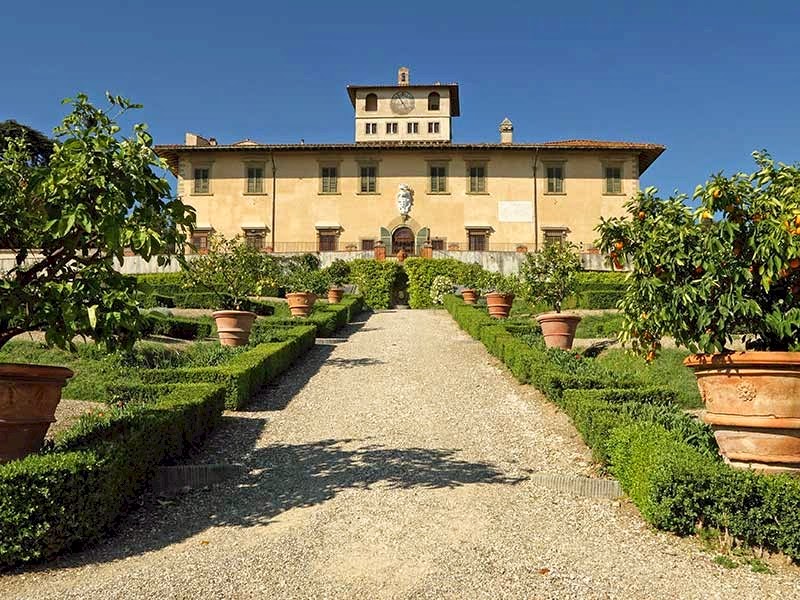
Villa La Petraia near Florence

The Medicean Villa La Petraia near Florence

Villa La Petraia
is situated at the location of an old castle first documented in 1362 and which changed owners several times (Brunelleschi, Strozzi, Alessandra dei Bardi, Salutati). The castle was acquired by the Medici when they returned to Florence in 1530 and transferred from Cosimo I to his son, Cardinal Ferdinando in 1568. It was enlarged and transformed into a Villa on the initiative of the latter who became Grand Duke after the death of his brother, Francis I, in 1587. The basic layout of the gardens dates back to the late 16 C, with 18 C and 19 C additions such as the "Piano della figurina" decorated with the Fountain of Fiorenza and the English style park on the northern side, created according to the typically romantic taste that characterised the first half of the 19 C.

The gardens of Villa La Quiete near Florence

The gardens of Villa La Quiete near Florence

Another beautiful Medicean villa in the area, described in some detail by Mrs. Grahame, is the Villa La Quiete. known in the past as the Palagio di Quarto. It is recorded as being a possession of the Orlandini family when it was given to the condottiero Niccolò da Tolentino in 1438. The Medici bought it in 1453. For centuries a convent, then briefly in the 1990's a property of the University of Florence, La Quiete has belonged to the Region of Tuscany since 2008. Its fine italianate garden was created during the 18 C. The curator at that time was Sebastiano Rapi, head gardener at the Boboli Gardens in Florence.
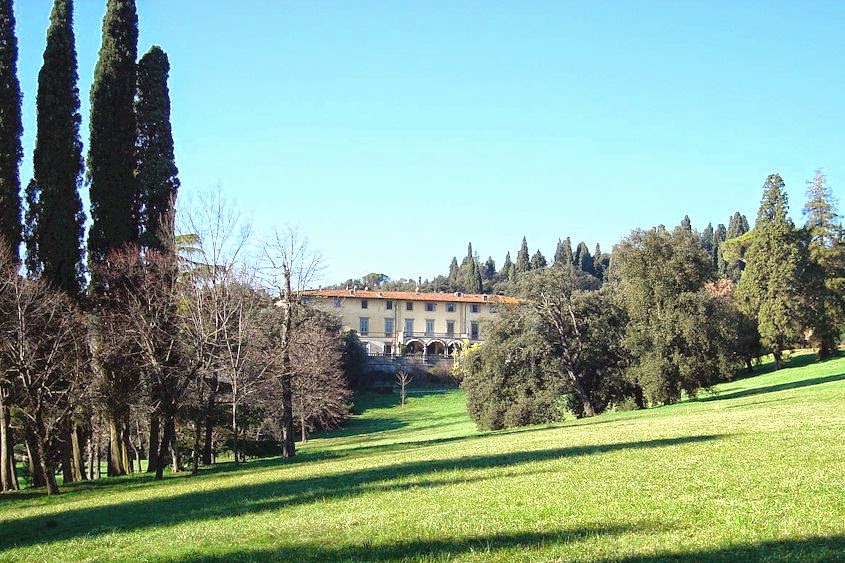
The parco all'inglese of Villa di Quarto near Florence

The parco all'inglese of Villa di Quarto


Villa di Quarto, sometimes known as Villa di Castelquarto, Villa Paxton or Villa della Granduchessa, like some of the other villas in the area, possesses, in addition to its giardino all'italiana, a wonderful parco all'inglese. The property has a huge range of tree species and is a botanists' paradise. Villa di Quarto was rented for a time by Mark Twain and it was here that his wife passed away. At least one letter survives from Mark Twain to Mrs Graham (sic), dated 12 April, 1904 and appreciating her charming letter that added grace to the vivid, sunny morning in Florence, but adds, "Our house is a hospital, these 5 months, & the sunshine is all outside of it, there is none within." His stay there was not improved by the owner of the house, his compatriot Frances Paxton, Countess Massiglia, described by Mark Twain's secretary, who had known her previously in Philadelphia, in these words. "Count Massiglia is far away serving his country as Consul in Persia or Siam, and he is likely to stay there too; and it seems to me that for the sake of peace or freedom, he has left this Villa in the hands of the Countess … Here she remains, a menace to the peace of the Clemens household, with her painted hair, her great coarse voice, her slitlike vicious eyes, her dirty clothes, and her terrible manners." Twain himself described her as "excitable, malicious, malignant, vengeful, unforgiving, selfish, stingy, avaricious, coarse, vulgar, profane, obscene, a furious blusterer on the outside and at heart a coward." It must have been an interesting time at Villa di Quarto for all those not actually living there. Alas, we have no word on this topic from Mrs. Grahame.

Other villas in the area include Villa Corsini and Villa Medicea della Topaia. Topaia means "rats' nest" and hence "a dump" but the name of this villa, once a hunting lodge and definitely never a dump, has a much more appropriate origin, deriving from "opus topiarum", the art of topiary.

Mrs. Grahame's new address was given in her letters as "Bel Gioiello, Quarto, Castello, Florence", referring to a two storey farm house dating from well before 1481, belonging to the estate of Villa La Petraia, located on Via Pietro Dazzi (currently number 29) on the northern boundary of the estate of La Petraia - hence the name of her book, "Under Petraia". It is neighbour to another farmhouse at numbers 25-27, known as Villa del Gioiello. Mrs Grahame does not use the name Bel Gioiello in this book. I have been unable to obtain a picture of the house since it remains private property, but the layout of the grounds can be made out from the aerial photo below. The back of the contadino's house to the right forms one side of the quadrangle and the round well opposite seems to have been filled in since Mrs. Grahame's time.

Bel Gioiello Castello Firenze

Aerial view of Bel Gioiello Castello Firenze

Mrs. Grahame describes the creation of her new garden, slowed by the unfortunate employment of two crooked administrators in succession. The author's age and unavoidable absences prevented her from supervising the work as closely as she had done at Il Villino Landau but within a couple of years a jungle of weeds and areas as dry as "brick dust" had become a beautiful garden, many of the plants having been transferred from Il Villino.

The pergola from Under Petraia

A photo of the pergola from the book.

The later chapters of "Under Petraia" are devoted to the "wanderings" of the title and refer to the author's exploration of more northerly parts of Italy, with many lines devoted to her acute analysis of Italian government, character and customs. I was sad to reach the last page and bid farewell to Mrs. Grahame and her gardens.

More about the formal Tuscan gardens of the villas of Tuscany, Italy.

More about the villas of Tuscany .

Tuscany Toscana
Don't forget to visit Elena Spolaor's
Travel Guide!

Up-to-date news on what to see and where to stay in Chianti and all of Tuscany & Umbria.

Chianti Travel Guide


vacation accommodations in Tuscany

Author: Anna Maria Baldini

All content copyright © ammonet Infotech website promotion 2014 - 2026. All rights reserved.

Friday, 14 September 2012

The Gardens of the Tuscan villas

Gardens and gardening without utilitarian purpose seem to be defining characteristics of civilised life. From the end of the 19 C well into the early 20 C, the gardens of the Tuscan villas were among the most important attractions for visitors to Tuscany. Although apparently less fashionable now, perhaps because visits to Tuscany are much shorter and more frenetic than formerly, at least one formal garden should be on your itinerary.

Tuscan villa formal gardens
The formal garden of Villa Vignamaggio in Tuscany
Although you will easily find un giardino all'inglese anywhere in Tuscany, to avoid any false expectations, it's important to realise that an italianate garden is never a flower garden in the way many famous English gardens are. The gardens of Tuscan villas are in essence an extension of the architecture of the villa and are therefore symmetrical with extensive use of topiary and statuary. A beautiful and distant vista beyond the garden is important, and, if supplies permit, water can be incorporated, either as ponds or water works of various kinds.

A fairly complete bibliography of guide books to Tuscan gardens is provided here.

Links to descriptions and pictures of many Tuscan gardens may be found here.

One of the most talented Edwardian garden designers was Cecil Pinsent. Among the gardens he worked on were Bernard Berenson's Villa I Tatti at Fiesole, Charles Augustus Strong's Villa Le Balze , Villa Capponi and, most famous of all, Iris Origo's Villa La Foce.

Click here for information on staying at Villa Gamberaia, one of the most famous villas in Tuscany.

Some other Tuscan villa gardens easily accessible to tourists include:

Badia a Coltibuono and its reconstructed monastic garden.
Castello Brolio, essentially a 19 C folly with matching garden.
Villa Vignamaggio, a magnificent Renaissance villa on the road from Greve in Chianti to Lamole.
Villa Gamberaia, one of the finest examples of a Tuscan villa hanging garden in Tuscany.
Tuscan gardens and Tuscan culture.

Last but not least, please realise that 99% of the villas offered as vacation rentals are farmhouses, not villas. Read "When is a Tuscan villa not a Tuscan villa?" and my article on Tuscan villas to rent.


Author: Anna Maria Baldini


All content copyright © ammonet Website Development and Design 2012 - 2020. All rights reserved.

Wednesday, 27 June 2012

Vacation villas and accommodations in Chianti, Italy

I am contributing to a new blog based around vacation villas and accommodations in Chianti, Italy, but, like my Tuscany-Toscana blog, open to everything of interest to visitors (and also residents) of Tuscany, and especially to the Chianti Classico area between Florence and Sienna.

The new Tuscany Blog is located here: http://www.greve-in-chianti.com/tuscany/

As we see more and more websites listing vacation rentals in Tuscany, it becomes increasingly important to do business via the long-established sites such as www.greve-in-chianti.com (founded in 1997) and www.bella-toscana.com (founded in 1998). Many of the new websites and the businesses behind them are very unprofessional and simply relist over and over again the same group of properties. Problems are also being reported by users of the bigger listing services, complaints being mostly with regard to inaccurate descriptions of the rental properties and lack of accountability if something goes wrong. Many of the big sites now belong to a very small number of corporate owners and this has exacerbated the issue of indifference to customers' problems with the rental procedures, refund procedures and the property descriptions. Too often, farmhouses are being listed as "villas", and rural properties that are not working farms are being listed as "agriturismi".

My recommendation remains to make use of owner-direct websites that are local so that the company owning the website has the opportunity to inspect every property listed, and so that there will be someone on hand to help out if problems arise. In my experience, the visitor has a much better feel for a place if he or she intereacts with the owner before arrival.

Don't for get to read my notes on what you can expect from your Tuscany vacation rental. Misplaced expectations can sometimes have a negative effect on your holiday.


All content copyright © ammonet Website Development and Design 2012. All rights reserved.