Thursday, 22 October 2015

Museo dell'Opera del Duomo in Florence re-opens on 29 October 2015 after extensive renovations

Great news for art enthusiasts! One of the most interesting art museums in Italy, the Museo dell'Opera del Duomo in Florence, re-opens on 29 October 2015 after extensive renovations. Opera del Duomo in this case means works of art from the cathedral, and the museum is located very near the Duomo, in the same building in which Michelangelo carved his famous marble "David". Many important art works have been moved over the years from the interior of the Duomo, from its facade, from Giotto's campanile and from the Baptistry to keep them safe from the elements, pigeons and humans. The majority of the larger works are sculptures and the smaller works are beautiful liturgical objects. Many of these art works have been restored during the work on the museum, and are very creatively displayed within. My favorite among them are the original and restored "Gates of Paradise" doors from the Bapistry, the result of 27 years of work by Ghiberti.

Museo dell'Opera del Duomo in Florence
Detail from a panel of Ghiberti's "Doors of Paradise"
There are around 750 works of art in the museum and, of those, some 200 are being displayed after being restored. Among the works on display are sculptures by Michelangelo, Donatello and Arnolfo di Cambio. There are also large scale reconstructions that provide a glimpse into the history of the Duomo, including the facade before it received its current decorations towards the end of the 19th century.

Pietà dell'Opera del Duomo, Michelangelo, Firenze, Italy
Michelangelo's mysterious Pietà

Note that you can obtain a wonderful view of the dome of the cathedral from a small room at the top of the museum and from the outdoor terrace on the third floor.


Tuscany Toscana
Don't forget to visit my Tuscany
Travel Guide!
Up-to-date news on what to see and where to stay in Chianti and all of Tuscany.

Tuscany Travel Guide


All content copyright © ammonet Infotech website promotion 2015. All rights reserved.

Monday, 5 October 2015

Truffle fairs, festivals and markets in Tuscany.

The white truffle season in Tuscany, October and November, is approaching so I'm listing here the upcoming truffle fairs, festivals and markets in Tuscany. As long as they are fresh, white truffles add a wonderful flavour to many Tuscan dishes, some of which exist only because of their truffle component. Note that I used the word "fresh" - after a few days out of the ground, the volatiles in the truffle will have dissipated completely, leaving behind something with the flavour of old cardboard. This is why people flock to these white truffle fairs - to buy fresh truffles and/or to eat dishes prepared on the spot with fresh truffles.

Truffle fairs, festivals and markets in Tuscany
Fresh Tuscan white truffles for sale in San Miniato

Truffles fairs, truffle festivals and truffle markets in Tuscany


Mostra Mercato “Il Villaggio del Tartufo”
Loc. Ponte Presale, Sestino
Last week in September.

Mostra Mercato “Tartufi d’Etruria”
Arezzo
First weekend October.

Festival del Tartufo (Convivlio Enogastonomico)
Loc. Svolta del Podere, Badia Tedalda
Second week October – Middle of November.

Mostra Mercato del Tartufo Bianco e Nero
Barberino di Mugello
Last weekend in October.

Mostra Mercato del Tartufo e della Castagna
Montaione
Last weekend in October.

Mostra Mercato e Sagra del Tartufo e Prodotti Tipici Locali
Scarperia
First and second weekend in November.

Mostra Mercato del Tartufo Bianco del Mugello
Borgo San Lorenzo
Third weekend in November.

Mostra del Tartufo Bianco
Montespertoli
Third weekend in November.

Sagra del Tartufo Bianco
Loc. Corazzano, San Miniato
First Sunday in October.

Sagra del Tartufo Bianco
Loc. Balconevisi, San Miniato
Third Sunday in October.

Mostra Mercato del Tartufo Bianco e Rassegna sei Prodotti Enogastronomici della Val di Cecina
Volterra
Last weekend in October and first weekend in November.

Mostra Mercato del Tartufo Bianco delle Colline Sanminiatesi
San Miniato
Last three weekends of November.

Mostra Mercato del Tartufo Bianco delle Crete Senes
San Giovanni d’Asso
Second and third weekend in November.

Pasta with a sauce of mushrooms and Tuscan truffle oil
Pasta with a sauce of mushrooms and truffle oil
Before setting out on a truffle-buying expedition, please be sure to educate yourselves on the subject of Italian truffle varieties and how to buy and prepare truffles.

Other fairs and festivals of Tuscany.

Market days throughout Tuscany by location.


Vacation accommodation in Tuscany
www.bella-toscana.com
Author: Anna Maria Baldini

All content copyright © ammonet Italian Web Site Promotion 2015. All rights reserved.

Friday, 4 September 2015

Gregorian chant at the Abbey of Sant'Antimo - now part of the past

Many visitors to the Val d'Orcia and the area around Montalcino, and from even further afield in Tuscany, have visited the Abbazia di Sant'Antimo not only for the beautiful architecture, but also to hear the monks chanting. Alas, it seems certain that Gregorian chant at the Abbey of Sant'Antimo ceased at the end of 2015. The French White Friars, who follow the rule of St. Augustine in the Norbertine order and who have been at the Monastery of Sant'Antimo for 36 years, returned to France before the end of the year.

The Abbey of Sant'Antimo near Montalcino in Tuscany, Italy
The Abbey of Sant'Antimo near Montalcino in Tuscany, Italy  

 The monks will move to the Abbaye de Saint Michel de Frigolet near Avignon in France. This French abbey, which dates from 1858, is in a critical state basically because only two monks remain there, both elderly, and the decision was made by the Norbertine Order to draw on their community elsewhere. An additional factor might have been the refusal of the Siennese authorities that watch over historical buildings to let the order rebuild the cloister and the monks' accommodation, meaning that growth in the size of the community at Sant'Antimo was precluded.

Gregorian chant during Mass at the Abbey of Sant'Antimo
Monks during Mass at the Abbey of Sant'Antimo

 The Bishop of Montalcino has indicated that he hopes to find another religious community to replace the departing White Friars but there has been no word on whether he has been successful. It is also highly unlikely that the new community will specialise in Gregorian chant.

What this means is that visitors who wish to enjoy the experience of Gregorian chant at the Abbazia di Sant'Antimo must try to come here within the next couple of months.


More about the Abbey of Sant'Antimo.


Tuscany Toscana
Don't forget to visit my Tuscany
Travel Guide!

Up-to-date news on what to see and where to stay in Chianti and all of Tuscany.


vacation accommodations in Tuscany

Author: Anna Maria Baldini

All content copyright © ammonet Infotech website promotion 2015 - 2021. All rights reserved.

Thursday, 6 August 2015

An exceptional vintage is predicted for Chianti Classico 2015

Very hot and dry weather conditions in Chianti mean an exceptional vintage is predicted for Chianti Classico 2015, according to the experts. This year will also be the second earliest vendemmia (grape harvest) since World War II, 2003, the year of a major drought, being the earlier harvest. Both quality and quantity of Chianti wine should be excellent this year, with estimated production rising at least 5% over last year, for an projected total of about 44 million hectoliters.

exceptional vintage for Chianti Classico 2015

The additional production should keep prices stable so watch for the Gallo Nero label of Chianti Classico 2015 when the wine reaches the shops in spring next year. The Riserva will appear on the market starting from late 2016.

As with all Chianti Classico wine, cellar your bottles for 5 to 6 years, not more. Some can be drunk even sooner, but they should not be kept for much longer than that period. In contrast to claret, for example, Chianti Classico is best consumed quite young.

Tuscan Extra Virgin Olive Oil harvest 2015


Tuscan olive oil

Based on my olive trees and those I have seen in central Chianti, this year's olive oil production in Tuscany will be infinitely better than the disastrous harvest of 2014. It looks as if it was cold enough during winter to inhibit the life cycle the Bactrocera oleae, the fruit fly that lays its eggs in the olives whence, eventually, the larvae eat their way out, destroying the fruit. Four days of frost kill the eggs. Last winter was the warmest on record in Tuscany and was followed by warm, humid conditions, ideal for fruit flies.

Until now the bacterium that is wiping out olive trees in southern Italy has not made an appearance in Tuscany. Xylella fastidiosa is a bacterium carried by aphids and has spread quickly through the olive trees of Apulia. This is particularly tragic because some of the olive trees there, in contrast to those in Tuscany, are up to a thousand years old. We are praying that the disease is brought under control before it spreads to Tuscany.

Tuscan wine tours and winery vacation rentals.

Tuscany Toscana
Don't forget to visit my Tuscany
Travel Guide!

Up-to-date news on what to see and where to stay in Chianti and all of Tuscany.

Tuscany Travel Guide


vacation accommodations in Tuscany

Author: Anna Maria Baldini

All content copyright © ammonet Infotech website promotion 2015. All rights reserved.

Tuesday, 9 June 2015

Antiques fair in Florence: 29th Biennale Internazionale dell’Antiquariato di Firenze

This year, 2015, the Biennale Internazionale dell’Antiquariato di Firenze will take place in the Palazzo Corsini in Florence from 26 September until 4 October. This Biennale is the oldest continuously running art and antiques fair in Europe and is now without doubt the most prestigious and international of all the Italian art and antiques fairs. It was originally located in the Palazzo Strozzi and since 1997 has found a home in the Palazzo Corsini, a fine 17 C palace on the Arno. In fact, the beauty of the Palazzo is an additional reason to visit this antiques fair in Florence.

Biennale Internazionale dell’Antiquariato di Firenze at the Palazzo Corsini in Florence
Palazzo Corsini in Florence viewed across the Arno

A reported 74 dealers will offer top of the line sculpture, porcelain, furniture and old master paintings and drawings for sale. Here is a painted wooden Bust of a Young Woman by the Renaissance master Antonio del Pollaiolo, dated between 1465 and 1470, and offered for sale that the 2013 Florence biennale.

Bust of a Young Woman by the Renaissance master Antonio del Pollaiolo
We cannot know until the show what the dealers will have for us this year, but there are sure to be some spectacular treasures available for those with a few thousand to spare. And all displayed in the beautiful interior of the Palazzo Corsini.

Antiques fair in Florence


See you in Florence late September, early October!

Tuscany Toscana
Don't forget to visit my Tuscany
Travel Guide!

Up-to-date news on what to see and where to stay in Chianti and all of Tuscany.

Tuscany Travel Guide


vacation accommodations in Tuscany

Author: Anna Maria Baldini

All content copyright © ammonet Infotech website promotion 2015 - 2016. All rights reserved.

Sunday, 7 June 2015

Where can I find the best pizza in Tuscany?

Well, I obviously can't answer the question, "Where can I find the best pizza in Tuscany?". For one thing neither I nor anyone else has eaten at every pizza restaurant in Tuscany and, of course, tastes vary. However, having said that, what I can tell you is where to enjoy truly excellent thin crust pizza in Tuscany. I prefer the thin crust variety of pizza because it's lighter, easier on the digestion and the taste of the dough doesn't distract attention from the tastes of the toppings.

thin crust pizza in Tuscany
A delicious thin crust pizza
In Greve in Chianti, Ristorante Pizzeria La Cantina, located away from Piazza Matteotti on the small Piazza Trento where the buses from Florence stop, serves a range of beautifully presented Tuscan dishes AND the best thin crust pizza I have tasted anywhere in Chianti. You have a choice of sitting outside on the piazza or inside in the "cantina" which used to be a coal store for the steam trams that used to run from Greve to Florence. The restaurant was the bar of the tram station which occupied Piazza Trento. During summer, I always sit outside in enclosed area on the edge of the piazza.

Ristorante Pizzeria La Cantina in Greve in Chianti, Tuscany
Interior of Ristorante Pizzeria La Cantina in Greve in Chianti
It's usually Alessandro taking the orders (using an app on his cellphone) with Lorena in charge of the kitchen. There's a good range of pizza toppings and a very good wine cellar. And don't forget to try some of the other dishes - classic Tuscan with individual flare.

Outdoor dining at Ristorante Pizzeria La Cantina in Greve in Chianti
Here's Alessandro taking an order


Happy customers at Ristorante Pizzeria La Cantina in Tuscany
Happy customers at Ristorante Pizzeria La Cantina

La Cantina house wine - an excellent Chianti Classico

Alessandro's family opened "La Cantina" in 1980 in the old tram bar and later extended it by converting the coal store into a commodious dining room. La Cantina is open for both lunch and dinner.

More about Ristorante Pizzeria La Cantina in Greve in Chianti.


Tuscany Toscana
Don't forget to visit my Tuscany
Travel Guide!

Up-to-date news on what to see and where to stay in Chianti and all of Tuscany.

Tuscany Travel Guide


vacation accommodations in Tuscany

Author: Anna Maria Baldini

All content copyright © ammonet Infotech website promotion 2015 - 2026. All rights reserved.

Friday, 10 April 2015

Edith Wharton in Italy - villas and gardens of Tuscany

The novels and short stories of Edith Wharton are still on the reading lists of the more progressive women's colleges in the United States, and some of them are even read from time to time. However, my interest in Mrs Wharton is based on her life-long passion for garden design on the grand scale and on her excellent book, "Italian Villas and their Gardens" which was published in 1904 and is scarce in its original edition. As a substitute or additional read, I can recommend Edith Wharton's Italian Gardens by Vivian Russell, who visited and photographed the surviving gardens described by Mrs Wharton.

Edith Wharton
Edith Wharton as an earnest young woman

Although Mrs Wharton (1862-1937) is often tarted up by English Literature departments as something of a rebel, her birth in 1862 into the richest of the rich class of "Old New York" made possible not only her fictional writings, with their insider's view of America's privileged classes, but, much more importantly to me, made it natural that she would travel extensively in Europe and allowed her to create a wonderful house and garden, "The Mount", near Lenox, Massachusetts, and to recreate a second one, "Le Pavilion Colombe", at Saint-Brice-sous-Forêt. These houses and estates were created according to the principles elaborated in her book The Decoration of Houses (1897), co-authored by Ogden Codman, and drew heavily upon her observations of the villas and gardens of Tuscany, especially of the Medicean villas. She wrote in Italian Villas and their Gardens that gardens should be divided into rooms and planned in concert with the house and the natural landscape, a Classical concept revived in Renaissance times.
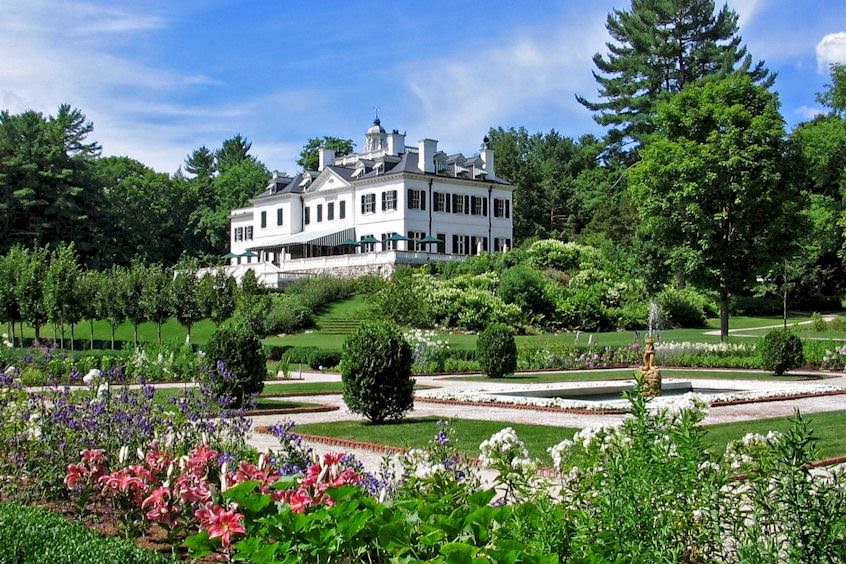
"The Mount", Edith Wharton's house and garden at Lenox, Mass.

Edith Wharton's parents were George Frederic Jones and Lucretia Stevens Rhinelander, and the saying "keeping up with the Jones" is said to refer to her family. After the end of the Civil War, her family traveled extensively in Europe. From 1866 to 1872, the Jones family visited France, Italy, Germany and Spain. During these travels, Edith became fluent in French, German and Italian. When at home in the United States, the Joneses spent their winters in their New York mansion and their summers in their Newport "cottage". In 1885, at age 23, Edith Jones married Edward (Teddy) Robbins Wharton, who was 12 years her senior. Wharton was from a well-established Boston family, and was a sportsman and a gentleman of the same social class, and shared her love of travel. Unfortunately, the marriage began to deteriorate, in part due to Teddy Wharton's severe depression, and Mrs Wharton eventually moved permanently to France. During World War I, she remained in her Paris apartment and was an ardent and effective supporter of the French war effort.
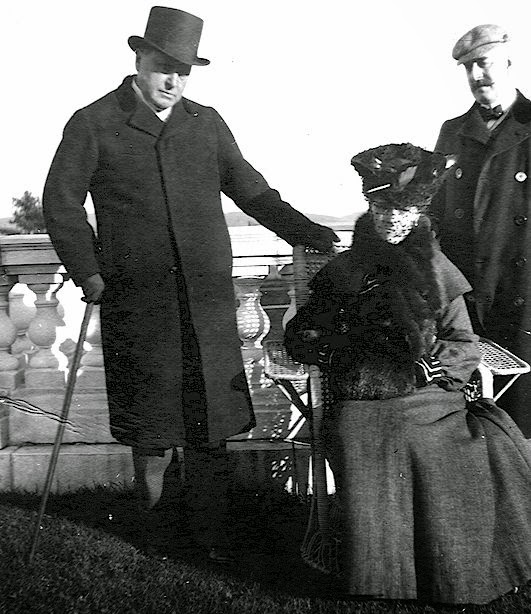
Henry James, Edith Wharton, and Howard Sturgis

Edith Wharton was an indefatigable motorist and was driven throughout Europe by her chauffeur Charles Cook in amazing, usually huge, cars that were often one of a kind. Her tours resulted in some excellent travel writing, including her book Italian Backgrounds and of course, Italian Villas and their Gardens. One of her favorite Tuscan gardens is also a favorite of mine, namely Villa Gamberaia, located on the outskirts of the village of Settignano near Florence. Bernard Berenson was another Florentine friend of Mrs Wharton and his Villa I Tatti is about a mile away from Villa Gamberaia. Villa I Tatti belongs to Harvard University and is not easily visited, but Villa Gamberaia is still in private hands and one can not only visit the gardens but it is possible to stay in one of the guest houses within the garden.

The garden of Villa Gamberaia viewed from the villa

Edith Wharton passed away on 11 August, 1937 at Le Pavillon Colombe, her 18 C house on Rue de Montmorency in Saint-Brice-sous-Forêt. She was comforted by her friend Mrs Royall Tyler, a native of Florence, born Elisina Palamidessi de Castelvecchio (sometimes styled "Contessa" - including by herself - but, although her mother held that title, it was not hereditary and she had no right to it). She was the wife of a famous Bostonian historian educated partly at Harrow and Oxford, with extensive European connections. My friend Paul Chipchase knew their son, William Royall Tyler, himself an eminent American abroad, and passed on to me many interesting reminiscences of Mrs Wharton.

I can strongly recommend the excellently written and beautifully illustrated recent biography of Edith Wharton by Eleanor Dwight. Everything you need to know is here along with masses of rare photographs.

R.W.B. Lewis wrote an earlier and highly regarded biography of Edith Wharton which I am about to read. I'll report back on that later. There is a further recent biography of Edith Wharton by Hermione Lee. This latter runs to 850 pages, including masses of analysis of Mrs Wharton's fiction. I doubt that I'll read it.

Villa Medici at Fiesole

Among the villa gardens near Florence that Mrs Wharton described in her book are Villa Petraia, Villa Demidoff (Pratolino), Villa Medici at Fiesole, Villa Corsini near Impruneta, Villa Gamberaia and Villa Capponi at Arcetri.

More about Tuscan villas.



Tuscany Toscana
Don't forget to visit my Tuscany
Travel Guide!

Up-to-date news on what to see and where to stay in Chianti and all of Tuscany.

Tuscany Travel Guide


vacation accommodations in Tuscany

Author: Anna Maria Baldini

All content copyright © ammonet Infotech website promotion 2015 - 2020. All rights reserved.

Wednesday, 8 April 2015

Things to do in Pienza and the Val d'Orcia

Pienza, the pearl of the Val d'Orcia, is one of my favorite towns and from 1st to 10th May, Pienza will look more beautiful than ever. During that period there will be even more things to do in Pienza and the Val d'Orcia with this year's "Pienza e i fiori", the flower and plant festival with the theme: "Cloisters and gardens in bloom". The cloisters and courtyards of the best of the Renaissance palaces (Palazzo Piccolomini, Palazzo Borgia and Ammannati) and some of the piazzas of Pienza will be decorated in the style of a great renaissance festival, festooned in laurel wreaths and bouquets of fruit (inspired by Renaissance paintings), box shrubs, climbing roses and many other flowers in the most beautiful areas of the town.

"Pienza e i fiori", the flower and plant festival in Pienza

The flower market, the final event, will take place in the streets of the old town and the gardens in Piazza Dante Alighieri, on Saturday and Sunday 9th & 10th May 2015. You can buy both in plants and flowers of all kinds, including everything you need for gardening and for cultivation. But for visitors, the pleasure is strolling through the streets and squares.

Courtyard of the Palazzo Piccolomini decorated in classic garden stlle.

In addition, there will be a shuttle bus providing visits to the historic gardens of the Val d'Orcia including the wonderful architecture of the gardens of Palazzo Piccolomini, the Leonini Garden in San Quirico d'Orcia, the famous garden of Villa La Foce, the life's work of Iris Origo, and finally the elegant garden of Palazzo Massaini where, at the conclusion of the visit, you can enjoy a free taste of the food and wine produced on the farm owned by Bottega Verde.

For garden nuts (and all other lovers of beauty) who will be staying in or visiting Florence, don't forget to pay a visit to the exquisite gardens of Villa Gamberaia nearby in Settignano.


More about The classic gardens of Tuscany.

More about the town of Pienza in the Val d'Orcia.

More about Visiting Pienza in the Val d'Orcia.

More about Gardens of the Tuscan villas.


Tuscany Toscana
Don't forget to visit Elena Spolaor's
Travel Guide!

Up-to-date news on what to see and where to stay in Chianti and all of Tuscany & Umbria.

Chianti Travel Guide


vacation accommodations in Tuscany

Author: Anna Maria Baldini

All content copyright © ammonet Infotech website promotion 2015 - 2023. All rights reserved.

Thursday, 26 March 2015

Volpaia - a place to stay in Volpaia, Tuscany

Volpaia is a village of great charm and well worth a visit if you are anywhere in the Chianti region of Tuscany, especially around Lamole, Gaiole and Radda. It is the home of the Compagnia di Volpaia wine company which owns a significant proportion of the village. Nevertheless, there are many private homes and businesses, as well as three excellent restaurants in Volpaia. The village also has much to recommend it as a base for a vacation in this part of Tuscany.

Volpaia in Chianti, Tuscany
A view of Volapia in Chianti, Tuscany
Volpaia is a fortified village, known in Tuscany as a "castello", located on the frontier separating the territories of Florence and Sienna. In its present form, the "castello" of Volpaia dates largely from the 11C. Only part of the original protective walls and two of the original six towers are still standing, but the mediaeval layout and buildings within the village remain largely as they were 900 years ago.

A place to stay in Volpaia, Tuscany
"Il Cassero", a great place to stay in Volpaia, Tuscany

A great place to stay in Volpaia is "Il Cassero" vacation apartment. The Italian word cassero can mean quarterdeck, in nautical terms, but, in relation to architecture, it means a raised structure forming part of a castle - in our case, a watch tower. "Il Cassero" vacation apartment is built inside one of the main watchtowers of Volpaia. The holiday apartment is furnished and decorated in Tuscan country style and sleeps up to 6 persons. Unusually for a Tuscan vacation rental, the minimum stay is only two days.

More about "Il Cassero" vacation apartment in Volpaia, Tuscany.

Tuscany Toscana
Don't forget to visit my Tuscany
Travel Guide!

Up-to-date news on what to see and where to stay in Chianti and all of Tuscany.

Tuscany Travel Guide

Author: Anna Maria Baldini

All content copyright © ammonet Italian Web Site Promotion 2015. All rights reserved.

Thursday, 18 December 2014

Where to go in Chianti, Italy

Many tourists planning their trip to Tuscany have heard of the Chianti area but don't know where to go in Chianti, Italy. Here I hope to provide a bit of guidance for visitors to the Chianti Classico wine zone in Italy. First a definition: the region of Chianti wines in the broadest sense covers quite a large amount of northern Tuscany (map of Chianti wine zones) but "Chianti" as an area usually refers to the Chianti Classico wine zone, a picturesque, oval-shaped territory situated between Florence and Sienna. Because of its position, Chianti is easily accessible by car and bus from Florence and Sienna, and vice versa - in fact, many tourists choose to base themselves at rural accommodations within Chianti and visit the art cities on day excursions. Here are some tips on where to go.

Where to go in Chianti, Italy
Where to go in Chianti? This looks like a good place!

Towns of interest in Chianti - these are also "municipalities" (comuni) with lots of things to see outside the main town:

Greve in Chianti
Greve in Chianti - the town and surrounding hills are rightly very popular
as a base for a stay in Chianti

Things to see and do in Chianti - here are some useful websites:


 Map of Chianti and nearby areas with links to specific websites.

Greve in Chianti website - packed with information on where to stay and what to do in Chianti.

Chianti Info website - information of a large range of topics useful for visitors to Chianti.

Bella Toscana tourist guide to the whole of Tuscany.

Chianti Travel Guide.

My Tuscany Travel Blog.

Last but not least, a good selection of owner-direct, self-catering vacation accommodations in Chianti.


All content copyright © ammonet Web Site Promotion 2012 - 2015. All rights reserved.

Vacation accommodations in Tuscany

Now is the time to consider reserving your vacation accommodations in Tuscany. As soon as Christmas and New Year are over, everyone will be starting to plan a vacation for the new year. If you'll be coming to central Italy, be sure to consider the option of staying for at least part of the time in Tuscan vacation accommodations in the country. There a numerous agriturismi, as these rural holiday homes are called, within easy reach of the bigger art cities by car or bus, and their prices can be extremely reasonable - as little as 65 euros per night for an apartment sleeping 2-3 people - that's with a fully equipped kitchen and often access to a pool. Add to this tranquility, panoramic views and, during summer, significantly cooler temperatures, and a stay in the country becomes a very attractive option.

vacation accommodations in Tuscany
A beautiful Tuscan agriturismo for your vacation accommodations in Tuscany

One of the most popular areas to stay in is the Chianti area between Florence and Sienna, with numerous agriturismi being located in the hills around Greve in Chianti. Florence is easily accessible by bus although a car makes it easier to visit Siena. The entire Chianti area is packed with history in the form of castles, fortified mediaeval villages, abbeys, monasteries, Romanesque churches and tower houses. And of course Chianti Classico wine is available directly from the wineries throughout the area.

To obtain the best rates, OWNER DIRECT reservations are recommended. You can ask the owner questions and at the same time avoid middleman fees any dodgy rental agencies that might be out there on the internet.

Click this link for accommodation in Chianti and elsewhere in Tuscany.

For information on almost every town and village in Tuscany and Umbria: www.bella-toscana.com

For information on the Chianti Classico area and Tuscany in general: www.chianti.info


All content copyright © ammonet Infotech 2015 - 2016. All rights reserved.

Thursday, 27 November 2014

Modigliani exhibition at the Palazzo Blu in Pisa October 2014 - February 2015

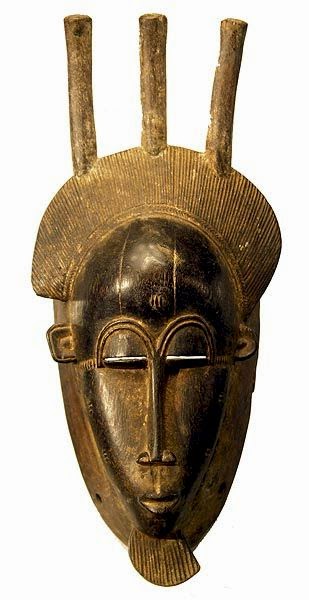
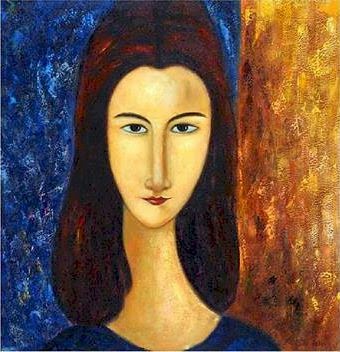
Among the artists whose works exert a strong attraction on me, Amedeo Modigliani ranks high among those still designated "modern" (even though he died in 1920). I came across him through a quite amazing coincidence. For my fourteenth birthday, my father gave me a Baule mask that he had brought back from the Ivory Coast. I was enchanted by it and went straight out to show it to one of my male friends who liked "curios". On the way to his place, I passed a bookshop displaying in its window a new book on the art of Modigliani, who was totally unknown to me. The resemblance between the picture on the cover and my mask was astonishing. I was instantly captivated (and my father was easily persuaded to buy me the book as well). Later I learnt that Modigliani was well-known for making sketches of the elongated faces of Baule masks, often heart-shaped and narrowing to a point at the chin beneath a small mouth placed unnaturally low on the face, and adapting this style to his paintings and sculptures.

African mask adapted by Modigliani
Baule African mask
Jeanne Hébuterne by Modigliani

This month (November, 2014), I had the chance to see up close a wonderful range of Modigliani's paintings. For the past few years, the Palazzo Blu in Pisa has mounted some extremely good modern art exhibitions - Chagall, Mirò, Picasso, Kandinsky, Warhol - and this year (extending into 2015), they are showing works by Modigliani and some of his contemporaries, mainly from the collection of the Pompidou Centre in Paris: Modigliani in Palazzo Blu 3 October 2014 - 15 February 2015: "Amedeo Modigliani et ses amis".

Amedeo Modigliani was born into the large Jewish community of Livorno in 1884. His family had been rich and successful but were hit hard by a collapse in metal ore prices during 1883-1884, coinciding exactly with the birth of Amedeo. His youth was plagued by illness, including the onset, at age 16, of the tuberculosis that eventually killed him. Modigliani studied at Guglielmo Micheli's Art School in Livorno from 1898 to 1900, then in Florence and later in Venice. Micheli was one of the Macchiaioli and although Modigliani did not take up their style, he was influenced by their palette. In 1906, he moved to Paris. This move was crucial to his artistic development but unfortunately allowed him to give free rein to his self-destructive tendencies. He started smoking hashish in Venice and continued in Paris where he added excess alcohol, including absinthe, to his "repertoire", none of which helped with his tuberculosis.

Jeanne Hébuterne
Jeanne Hébuterne
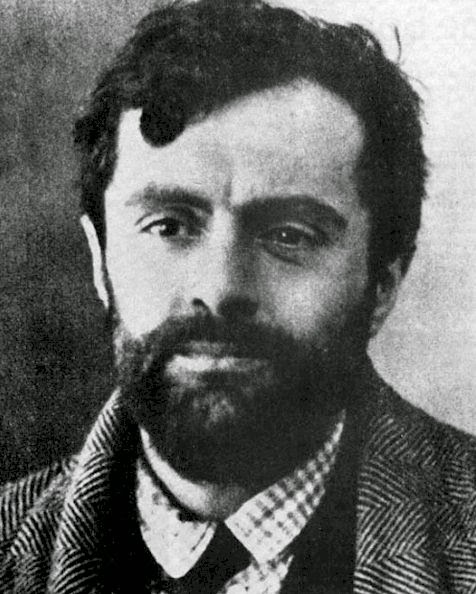
Amedeo Modigliani
Amedeo Modigliani near the end of his life

Modigliani had endless love affairs and liaisons but in 1917 he met the beautiful Jeanne Hébuterne who became his mistress and muse. Their relationship was amazingly fruitful in terms of art but truly tragic in human terms. He painted endless portraits of her - or rather, inspired by her, since they bore little or no resemblance to Jeanne, other than being female and beautiful. She bore him a daughter and was pregnant with their second child when, distraught, she killed herself on the day of his death from tuberculosis, 24 January, 1920.

Modigliani was a key contact between the School of Paris and the Futurist artists based in Italy, and his fame has far eclipsed both the Futurists and the Macchiaioli who are hardly known outside of Italy today. His highly recognisable style and the prodigious number of variations that he painted provided opportunities for art forgers that they were quick to seize. Even his sculptures were copied and passed off as originals. Three of them are concurrently on display (as fakes, I hasten to add!) at the Museo Nazionale di San Matteo in Pisa.

Modigliani nude


Palazzo Blu Pisa

Shore excursions from Livorno.

Tuscany Toscana
Don't forget to visit my Tuscany
Travel Guide!

Up-to-date news on what to see and where to stay in Chianti and all of Tuscany.

Tuscany Travel Guide

Author: Anna Maria Baldini

All content copyright © ammonet Italian Web Site Promotion 2014. All rights reserved.